
Why Travel Is One Of The Best Forms Of Education
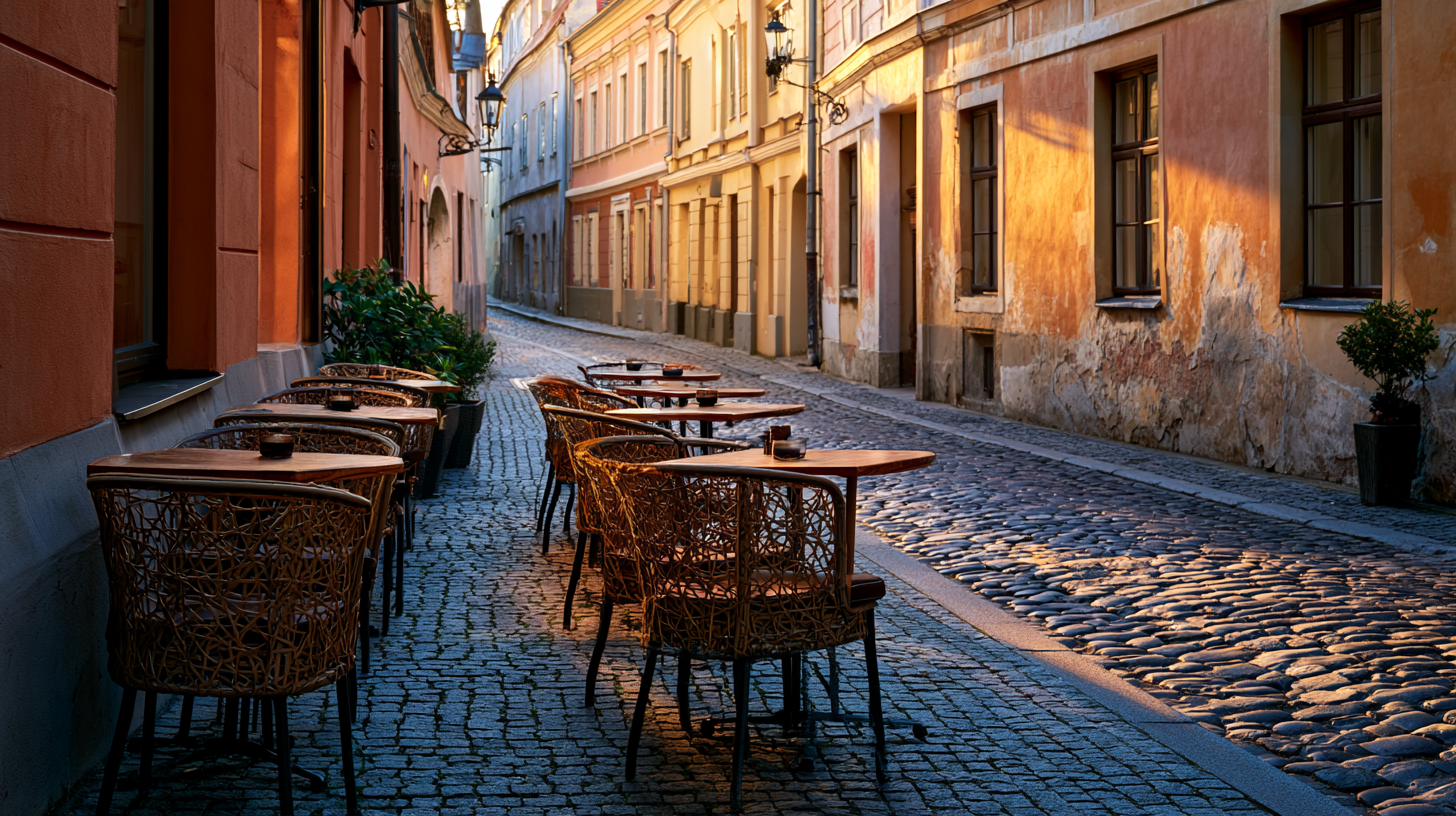
Through languages learned in school and then dormant for years and then suddenly needed again in a completely different context. Through problems that had to be solved far from home with limited resources and no obvious fallback. Through the simple experience of driving through places that had previously existed only as names on a map and discovering that the world was both larger and more navigable than it had appeared from a distance.
This article is not a list of reasons why travel is good for you. It is an attempt to explain, honestly and specifically, why travel has been one of the most significant forms of education in my own life, and why I want my son to have as many similar opportunities as possible.
Travel Makes The World Feel Smaller
There is a difference between knowing that Belgium lies between the UK and Germany and having actually driven through it. Stopped at a service station outside Brussels. Noticed that the road signs change. Felt the transition from one place to another happen gradually rather than as a line on a map.
Geography learned through movement becomes permanent in a way that geography learned from a textbook rarely does. You stop thinking about European countries as coloured shapes and start understanding them as places with their own textures, rhythms, and atmospheres. Belgium feels different from the Netherlands. Germany feels different from Austria. The descent from Austria into Hungary and the landscape that follows are something you have to drive through to properly grasp.
I grew up in England with a reasonably conventional education. Europe was something we studied. But driving a route that takes you from the Channel ports through Belgium and Germany, then south into Austria, east through Hungary, and eventually into Bulgaria produces a different kind of knowledge. Distance becomes real. History becomes concrete. The places stop being abstract.
What strikes you, repeatedly, is how different things are across relatively short distances. Languages change. Architecture changes. The way people interact in shops and petrol stations changes. And the accumulated effect of experiencing that variation is a far more grounded understanding of Europe than any classroom could provide.
That shift, from abstract to concrete, is one of the most valuable things travel does.
What My Parents Taught Me About Travel
My parents were not wealthy, but they were committed to creating experiences. Family holidays across Europe were a consistent part of childhood, and my father in particular had a philosophy about travel that shaped how I have approached it ever since.
He was not interested in being a tourist in the passive sense. He wanted to engage with places rather than simply visit them. And one of the most specific habits he insisted on was that wherever we travelled, my brother and I learned at least a few basic phrases in the local language. Hello, goodbye, please, thank you. Not fluency. Just enough to meet people halfway.
It sounds like a small thing. But the effect of that habit was not small. It taught respect. It demonstrated to local people that you had made some effort. And it consistently opened small doors. A friendlier response in a shop, a more helpful exchange at a petrol station, a conversation that would not have happened if you had simply assumed English was everyone's responsibility.
That habit stayed with me. It is one I intend to pass on.
The Ski Trips That Changed Everything
The holidays that had the most lasting impact were the ski trips, though not always for the reasons that might be obvious.
The early trips were package holidays. Austria first, then later the United States, booked through Virgin. Everything arranged in advance. Flights, accommodation, transfers, lift passes. The kind of holiday where the logistics are someone else's problem.
The skiing was the obvious focus. But something shifted as my father spent more time travelling and began to realise that independent organisation was both possible and preferable. Flights, accommodation, car hire, ski arrangements, things that had been bundled into packages, could be researched and booked directly. The result was more flexibility, lower cost, and considerably more opportunity to see places beyond the resort.
That shift made the difference. Once a hire car was part of the arrangement and the itinerary was self-designed, the trips began to include things that package holidays did not. Los Angeles. San Francisco. Alcatraz on a grey morning with the bay behind it. Places that had previously existed only in films and television became places I had actually stood in.
There is something specific that happens when you visit somewhere you have only ever seen on a screen. It is not simply that the place becomes real. It is that your sense of what is reachable expands. The boundary between the world you know and the world that exists beyond it becomes more permeable. And once that shift happens, it tends to be permanent.
The lesson, which took a while to fully articulate, was not about skiing. It was that independent travel, planned rather than packaged, creates opportunities that a managed itinerary closes off. My father figured that out gradually, and watching him apply it shaped how I have approached travel ever since. Much of the trip-planning process I use today comes directly from those experiences.
Teachers Matter More Than They Realise
Two school subject choices shaped the direction of my life significantly, and both involved teachers.
The first was choosing to study German rather than History. I genuinely enjoyed history. My history teacher, Mr Southworth, was excellent in a way that made the subject feel important. But my German teacher, Mrs Rudge, taught in a way that made language feel like an opening rather than an exercise. She made it clear that learning German was not simply about passing an exam. It was about accessing something beyond the classroom. I believed her, and chose German.
That decision turned out to matter. Not because I became fluent or worked professionally in German-speaking environments, but because years later, travelling through Germany and Austria on long drives between the UK and ski resorts, the language made those journeys easier and more enjoyable. Conversations with hotel staff, petrol station attendants, restaurant owners. The ability to ask a simple question and understand the answer. To navigate a place with a degree of confidence rather than feeling entirely dependent on other people's English. German made Germany and Austria feel more accessible, and that is not a small thing when you are spending weeks driving through them.
The irony is that choosing German did not diminish my interest in history. If anything, travel brought history back into my life in a different way. There is a huge difference between reading about Europe and driving across it. Visiting places whose names you first encountered in a classroom. Seeing how geography shaped events and how those events still shape the places people live today. Travel did not replace history. It made it tangible.
The second was French, taught by Mr Amieli. French at school felt like work. It did not come as naturally as German and did not feel immediately useful. Years later, during ski instructor training in France, I needed to pass a language assessment as part of the qualification process. I prepared properly for it, meeting regularly with a British friend who had studied French to degree level. We worked through likely assessment topics, corrected mistakes, practised responses and eventually moved beyond the test material into ordinary conversation about life in the resort and whatever else was going on around us.
When the assessment arrived, I passed comfortably. The preparation mattered, but so did the foundation that had been built years earlier. The school French had not disappeared. It was still there, waiting to be used. Mr Amieli had done his job properly. I simply did not appreciate at the time how useful it would eventually become.
There is also Mr Carman, Head of Art, worth acknowledging here. Art was my favourite subject outside sport, and I later completed a BA (Hons) in Fine Art partly because of the foundation built at school. He also organised the school ski trips, which is an irony worth noting because I never attended any of them. I was invariably away skiing with my father and brother at the same time.
What makes Mr Carman unusual in this story is that his influence did not end when school finished. We shared interests in art, rugby and the mountains, and over the years he has remained part of my life. Since my wife passed away, he has visited my son and I in Bulgaria several times. Partly, I suspect, to make sure we were doing alright. Partly because he enjoys skiing and knows I have been teaching here for a number of years. Some teachers stop being teachers when school ends. Others remain mentors and friends long afterwards.
Looking back, what strikes me is that all of these teachers were doing the same thing. They were opening doors. Mrs Rudge opened a door into languages and travel. Mr Amieli provided knowledge that became useful years later in a completely different context. Mr Southworth helped create a love of history that travel would later bring to life. Mr Carman encouraged interests and friendships that endured long after school had ended.
Travel eventually took me through many of those doors. But somebody first had to show me they existed.
Travel Teaches Confidence Through Small Problems
One of the things formal education struggles to teach is how to respond when something goes wrong in an unfamiliar environment with no obvious support structure.
Travel teaches this constantly, in small doses, and the accumulated effect is significant.
A moment that comes back to me clearly involved a car journey between France and Italy. Something went wrong with the vehicle, seriously enough to reduce it to approximately 40 kilometres per hour on a mountain road. It was not a dramatic emergency. But it was a problem that needed solving, far from home, in a country where my Italian was limited.
Local people helped. They were generous with their time in a way that genuinely surprised me. The problem was eventually resolved, the journey continued, and what remained was not the frustration of the breakdown but something more useful: a confirmed understanding that unfamiliar problems in unfamiliar places are generally solvable.
That is the thing travel teaches that is genuinely difficult to develop any other way. Not that everything will go smoothly, but that when it does not, the situation can usually be navigated. The uncertainty does not go away. What changes is your relationship to it. You stop treating unfamiliar situations as inherently threatening and start treating them as problems that probably have solutions, because experience has shown you that they usually do.
That shift in how you relate to uncertainty is, I would argue, one of the most practically valuable things travel provides.
The Car Changed What Was Possible
My first ski season was in 2012. I went without a vehicle, which meant airline baggage restrictions, organised transfers, dependence on resort buses and other people's schedules, and a significant constraint on both what I could carry and where I could go.
Ski equipment is heavy and awkward to transport commercially. The tools and materials needed to maintain skis properly did not fit within baggage allowances. Days off were limited to wherever could be reached on foot or by public transport. The season was good, but it existed within tight parameters.
Buying a Nissan X-Trail before a subsequent season changed those parameters considerably.
The drives became part of the journey. Les Deux Alpes in June, Stelvio in September, Tignes in October. These were not simply holidays. They were training camps and stepping stones towards qualifications and a career that I cared deeply about. Routes that would have been logistically complicated or expensive by any other means became straightforward. The back of the X-Trail carried everything, including a small workbench for ski maintenance, which meant arriving properly equipped. Days off changed too. Rather than being confined to the immediate vicinity of the resort, it was possible to drive to nearby towns, explore independently, and return without depending on anyone else's schedule.
But what the vehicle created went beyond convenience. It changed the quality of independence available. The ability to go somewhere when you decided to, carry what you needed, stop when something was interesting, and change plans without financial penalty. That is a different category of experience from being moved through a system someone else has designed.
The vehicle did not just provide transport. It expanded capability. And that distinction, between being transported and being able to move independently, is one worth understanding when thinking about what vehicle-enabled travel actually offers.
Travel Is Education For Children Too
I have lived in Bulgaria for approximately ten years now. The skills built through years of travel have proved useful in ways that go well beyond specific trips.
Learning to communicate across language barriers made learning Bulgarian, imperfectly but usefully, feel like a familiar kind of challenge rather than an impossible one. Making friends in a country where you did not grow up required the same openness and adaptability that travel had been building for years. Dealing with professionals, navigating bureaucracy, adapting to different cultural norms, these were not new problems. They were versions of things that travel had been teaching since the first family holiday abroad.
Travel skills do not expire when you return home. They apply to wherever life takes you next.
In many ways, I am simply trying to pass on opportunities that my parents created for me. The experiences they prioritised during my childhood shaped the way I see the world, and I would like my son to benefit from the same kind of exposure to different places, people and cultures.
My son is the reason much of this thinking has become more deliberate in recent years.
I want him to have the opportunities that travel gave me. Not necessarily the same destinations or the same experiences, but the same quality of engagement with the world. The same confidence that comes from navigating unfamiliar places. The same understanding of geography, culture, and human variety that is very difficult to develop without actually being in places.
We have plans we are working toward. Basketball trips to Thessaloniki to watch games together. Karting trips that combine his interest in motorsport with experiencing different countries. Road trips through Greece and Italy. These are not completed trips. They are plans in various stages of development.
But the intent behind them is clear. The basketball trip is not really about basketball. The karting trip is not really about karting. These are contexts for being somewhere new together, for navigating somewhere unfamiliar, for having the small problems and unexpected discoveries that travel reliably provides. The things he will remember are not the hotels or the logistics. They are the specific moments that happen when you are somewhere you have never been before, with someone you trust, working something out together.
Travel Is Not About Escaping Life
Travel is often described as escape. The idea that you leave behind the ordinary world and go somewhere else to recover from it.
That has not been my experience of the travel that mattered most.
The most valuable travel I have done has been engagement rather than escape. Engagement with unfamiliar places, unfamiliar languages, unfamiliar problems, and unfamiliar people. The kind of engagement that produces skills and understanding that remain useful long after you have returned home.
Confidence is one of them. Not the abstract concept but the practical habit, built through repeated experience, of remaining functional when things do not go according to plan.
Resilience is another. Not as a personality trait but as something that develops through repeated exposure to manageable difficulty and the consistent discovery that it can be managed.
Communication is a third. The ability to make yourself understood across language and cultural differences is one of the most transferable skills available, and travel is one of the most effective ways to develop it.
These are not soft benefits. They are capabilities that apply directly to work, relationships, and the practical navigation of life. They are, in the most straightforward sense, educational.
The Vehicle Is The Enabler, Not The Destination
Camp Comfort Life is not really about vehicles, or camping, or sleeping arrangements.
It is about making more travel possible, more often, for ordinary people working with realistic budgets. The vehicle is the most consistent tool I have found for doing that. Not because sleeping in a car is desirable in itself, but because removing the largest accommodation costs from a journey dramatically changes what is accessible.
Of course, reducing accommodation costs only makes sense if you are also thinking carefully about staying safe when sleeping in your car.
A trip that might otherwise be too expensive to justify becomes achievable when accommodation costs are reduced significantly. And that trip creates the experiences, the learning, and the family time that would not have happened otherwise. That naturally raises questions about where you're legally allowed to spend the night when travelling this way.
This is the logic behind everything on this site. Not frugality for its own sake. Not discomfort as a virtue. But the clear-eyed understanding that reducing certain costs creates opportunities that matter considerably more than the costs themselves.
The vehicle is the enabler. The experiences are the point.
A Final Reflection
Travel has shaped my life in more ways than I can neatly account for.
The languages opened doors. The confidence built through years of navigating unfamiliar situations has been useful in contexts that had nothing to do with travel. The habit of engaging with places and people rather than simply passing through them has applied directly to building a life in Bulgaria that feels genuinely rooted rather than temporary.
Amsterdam became one of those places for me. It started as a destination and eventually became part of my personal history. It was the city where I met my wife, and a place I have returned to many times since for reasons that have little to do with tourism and everything to do with the people and memories connected to it.
And there is the fact, worth stating plainly, that if I had never left the UK, never pursued ski instructing, and never spent those years travelling around Europe, I would almost certainly never have met my wife. Travel did not simply create memories. At a certain point it changed the direction of my life entirely, in ways I could not have planned for and did not see coming.
That is perhaps the most honest argument for travel as education. Not that it is enriching in some general sense, but that it puts you in places and situations and networks that would not otherwise exist, and the consequences of that are often far more significant than the trips themselves.
And now there is my son, at the age where the world is beginning to come into focus as something real and navigable rather than something distant and abstract.
The goal is not to visit the most countries. The goal is not to sleep in a vehicle or find the cheapest possible route anywhere. The goal is to show him, through direct experience, that the world is larger and more interesting and more navigable than it might appear from a small town in Bulgaria, and that the ability to move through it confidently is one of the most useful things a person can develop.
Travel is how I learned that. It is what I want for him.
That is why it remains, in my view, one of the best forms of education available.
