
How To Stay Safe When Sleeping In Your Car
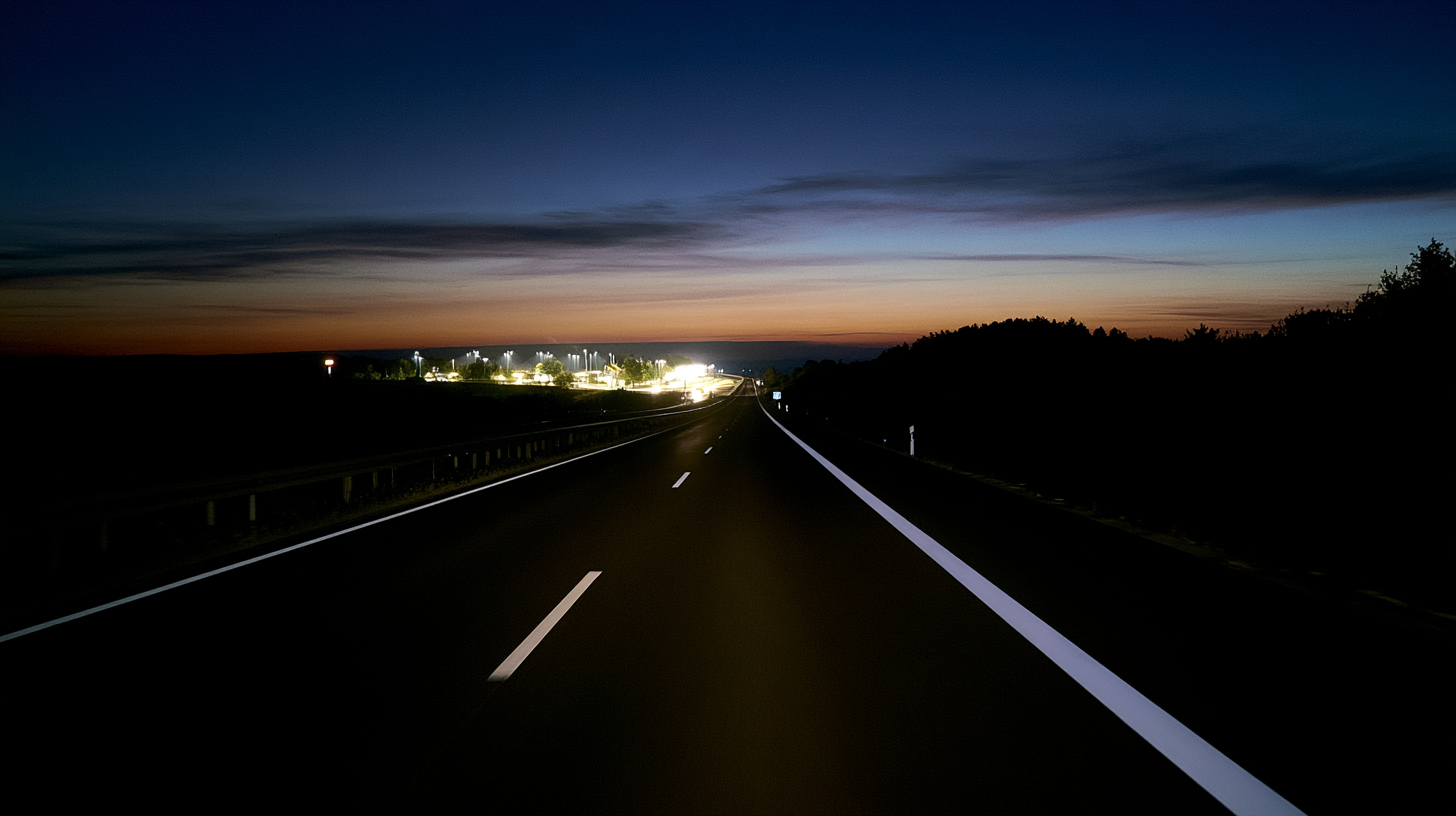
In the spring of 2015, I was driving back to Amsterdam after finishing a ski season in north-east Italy. The journey was around fifteen hours. Everything had been packed the night before. I was eager to get home and see my girlfriend after several months away, and I set off early with the intention of driving straight through.
About ninety minutes from Amsterdam, somewhere on the German motorway, fatigue hit properly. Not the tired-but-manageable kind. The kind where you catch yourself not remembering the last few kilometres.
My father had said something to me when I first learned to drive that had always stayed with me. Whenever he thought I was in a hurry on the road, he would say: "It's better to be ten minutes late than not get there at all." That phrase came back to me on that German motorway.
I pulled off at the next rest area. It was daylight, there were toilets and benches, and I had no intention of staying longer than an hour. I set an alarm, pulled a beanie down over my eyes, and went to sleep in the driver's seat.
When I reached Amsterdam that morning, I discovered that my backpack had been taken from the boot. Inside it was a MacBook Pro, a GoPro with accessories, and several other items I had accumulated over the winter season. Together they were worth well over £3,000.
The theft had happened while I slept at that rest stop. And it happened because of a mistake I did not know I was making.
Stopping was the correct decision. That has never been in doubt. What went wrong had nothing to do with the decision to rest and everything to do with what I did not know about my own vehicle.
The Biggest Threat Is Often Fatigue
Before getting into the security lesson, it is worth dwelling on this point because it is the one that actually matters most.
Tired drivers make poor decisions. They react slowly, misjudge distances, and sometimes stop registering the road ahead properly. The statistics on fatigue-related accidents are not comforting reading, and the honest truth is that most people who push through tiredness on a long drive are taking a risk they would never consciously choose to take if they stopped to think about it clearly.
The decision to stop at that German rest area was the right one. Ninety minutes from home, after fourteen or more hours on the road, pushing on would have been genuinely dangerous. An hour's sleep, even in a driver's seat at a motorway rest stop, was more valuable than the equipment that was stolen.
This is the starting point for any conversation about sleeping safely in a vehicle. The question is not whether to stop. When you are that tired, stopping is not optional. The question is how to stop in a way that reduces unnecessary vulnerability. Many drivers know they should stop. The problem is pride. They convince themselves they can do just another hour.
The Most Expensive Mistake I Made Sleeping In My Car
The vehicle I was driving in 2015 was a 2008 Nissan X-Trail. A solid, reliable car that had served well throughout the ski season.
What I did not know was that the X-Trail would not lock if the key was left inside the vehicle. When I pressed the key fob to lock up before sleeping, nothing happened. I assumed it had locked. I did not check the doors manually. I settled down to sleep believing the vehicle was secure when it was not.
Someone, or a group of people, working that rest area saw a visibly occupied vehicle with no window covers, waited for the occupant to fall asleep, and helped themselves to what was in the boot. It would have taken thirty seconds.
I had no window covers. I was clearly visible from outside. There was nothing to suggest the vehicle was anything other than straightforward to access.
The loss was significant and frustrating. But here is what was not taken.
Underneath my outer clothing, I was wearing a flat holster bag that I had used throughout years of travel. Inside it were my passport, wallet, cash, phone, car keys, and the critical documents I needed to continue the journey. None of that was touched because none of it was accessible. It was on my body while I slept.
The laptop and camera were replaceable, eventually. The journey home was not interrupted. I was frustrated but not stranded.
That distinction matters more than it might immediately seem.
Looking back, the missing equipment was not actually the worst-case scenario. The more sobering thought is that somebody was close enough to enter the vehicle while I slept. The fact that they chose theft rather than confrontation is something I remain grateful for.
Know Your Vehicle Before You Trust It
The central practical lesson from that day was simple: I did not understand how my own vehicle's locking system worked and I paid for that gap in knowledge.
Most modern vehicles have straightforward central locking that behaves predictably. But there are exceptions, quirks, and situations worth understanding before you rely on them.
Some vehicles will not lock with a key inside, as I discovered. Some keyless entry systems can be vulnerable to relay attacks in ways that standard key fobs are not. Some door handles on older vehicles have worn locks that do not engage reliably. Some tailgates lock independently from the main doors and need to be checked separately.
None of this is reason for paranoia. It is reason to spend five minutes understanding your specific vehicle before you sleep in it.
The habit is simple: after locking, check each door manually. Not because the lock probably failed, but because checking takes ten seconds and discovering a door is unlocked while you are still awake is infinitely better than discovering it was unlocked after something has gone wrong.
After the X-Trail incident, I eventually bought a VW Golf Estate for European travel. Part of the appeal, beyond the practicality of the folding rear seats, was that the Golf's locking system is obvious and clearly audible. When it locks, you know it has locked. There is no ambiguity.
That is not a minor consideration. Clear feedback from a locking system is worth something when you are tired and setting up for a night's sleep in a motorway rest area.
Choosing Safe Overnight Locations
No location is universally safe, and anyone who tells you otherwise has not spent enough nights in enough places. What good location choice does is reduce unnecessary risk. Before evaluating safety, it's worth understanding where you're legally allowed to spend the night in the first place.
Motorway rest areas are convenient and widely used for overnight stops across Europe. They are also, by definition, places where large numbers of unknown people pass through at all hours. Major transport corridors, particularly those connecting southern and eastern Europe with northern and western Europe, carry huge volumes of traffic. The rest areas along these routes see everything from families having lunch to professionals working their way through the continent. Opportunistic crime happens in these places, as it does anywhere that sees high footfall and temporary, distracted occupants.
That is not an argument against using rest areas. It is an argument for understanding what they are and responding accordingly.
Campsites reduce most of these concerns significantly. You have paid to be there, the environment is semi-managed, and the population is predominantly other travellers with similar intentions to your own. They are not risk-free, but the character of the risk is different and generally lower.
Residential streets in quiet towns and villages offer a different kind of safety through ordinariness. A parked car on a residential street is unremarkable. Nobody is paying particular attention to it.
Ferry terminal areas near major ports are worth considering for overnight stops before early sailings. They tend to be reasonably safe, are often used by other travellers for exactly the same purpose, and are lit.
The general principle across all locations is to avoid places where you are an obvious target: visible, isolated, with valuables on display, in a vehicle that does not appear secure. Most of what makes a location risky is not the location itself but the combination of visibility, isolation, and apparent vulnerability. These days I prefer to plan overnight stops before I need them rather than waiting until fatigue forces the decision.
Reducing Your Visibility
The German rest stop incident happened in part because I was completely visible to anyone who walked past. A person asleep in a driver's seat, no window covers, backpack visible in the boot area, no obvious sign that the vehicle was locked.
Window covers change this dynamic significantly. They make the interior of the vehicle invisible from outside. They reduce the information available to anyone assessing whether the vehicle is worth approaching. A vehicle with covered windows looks very different from one where the occupant's sleeping arrangements are on full display.
If privacy is a concern, there are practical ways of reducing the feeling of vulnerability when sleeping in a vehicle. Window covers are one of the simplest. Choosing the right window covers can make a significant difference to both privacy and security. The short version for security purposes is that window covers are not just about light blocking and privacy. They also need to be balanced against ventilation and managing condensation overnight. They reduce visibility and reduce the information a potential thief can gather about what is inside and whether the vehicle is occupied.
Lighting is worth thinking about too. A light on inside a vehicle is visible from a considerable distance. Organising your sleeping setup before dark, or using a very dim head torch rather than the vehicle's interior lights, avoids announcing your presence and your activity to anyone nearby.
Keep noise low. Stay settled once you have arrived. A vehicle that has been still and quiet for an hour looks different from one with occasional movement and light.
Keeping Valuables Secure
The most common version of this mistake is not the dramatic one. It is the small, habitual thing that people do because they are tired: leaving a bag on a seat, leaving a laptop visible on the back seat, leaving equipment in plain sight in the boot.
Visible valuables are an invitation. Not a guarantee of theft, and not a reason to assume the worst of everyone, but an unnecessary vulnerability that is easy to remove.
Everything worth stealing should be out of sight before you sleep. Bags in the boot area covered with a blanket or stored under other items. Electronics not visible through glass. The vehicle should look, from outside, like it contains nothing particularly interesting.
A car safe or locking box bolted to the vehicle provides a physical barrier for items that need to stay in the vehicle overnight. They are not impenetrable but they are a meaningful deterrent against opportunistic theft, which is the most common type.
Digital backups matter. Documents, travel insurance details, reservation confirmations, and anything else you would need in an emergency should exist somewhere accessible independently of the physical copies. A secure cloud folder costs nothing and has saved many travellers a significant amount of difficulty.
Protect The Things That Allow You To Keep Moving
This is the lesson that the German rest stop taught most clearly, and it is the one I have applied on every trip since.
There is a practical difference between valuable items and critical items. Valuable items are things that are expensive and inconvenient to lose. Critical items are things whose loss stops the journey.
A MacBook Pro is valuable. Losing it is expensive and frustrating. But it does not stop you getting home.
A passport is critical. Losing it on a road trip through multiple countries creates a problem of an entirely different order. So does losing your car keys, your wallet, your phone with your navigation and your contacts, or the travel documents that allow you to cross a border or board a ferry.
The philosophy I use is simple: the items that allow the journey to continue stay on my body whenever it is practical for them to do so. A flat holster bag worn beneath outer clothing is undetectable from outside, inaccessible to anyone who does not physically remove my jacket, and the last thing I put on before sleeping and the first thing I put on when I wake up.
Passport, wallet, cash, phone, keys, insurance documents. Those items travel with me rather than in the vehicle.
Losing the MacBook was genuinely frustrating. But I drove home. The journey continued. That outcome was entirely due to the habit of keeping the critical items separate from everything else.
This is not paranoia. It is the same logic that experienced travellers apply in airports, on public transport, and in busy places everywhere. In a vehicle on a long road trip, the stakes are sometimes higher because you are further from home and further from the systems that would help you recover quickly from a crisis.
Trust Your Instincts
This is the shortest section in this article and probably the most important one to state plainly.
If a location feels wrong, leave it. Not every instinct is correct, but the cost of acting on a bad feeling and moving to a different spot is ten minutes of inconvenience. The cost of ignoring a correct instinct can be considerably higher.
Always have a backup location in mind before you arrive at your planned overnight stop. If the primary spot does not feel right for any reason, you have somewhere to go without having to make decisions when you are tired.
The places that tend to produce the worst nights are the ones where you arrive and spend twenty minutes convincing yourself it is probably fine. The places that tend to produce good nights are the ones where you arrive and feel settled almost immediately.
Western Europe, Eastern Europe And Risk
People ask fairly regularly whether it is safe to sleep in a vehicle in eastern Europe. The honest answer is that the question is less useful than it sounds.
Opportunistic crime happens everywhere. It happens at motorway rest areas in Germany, as I can personally confirm. It happens in car parks in France, at campsites in Spain, and on streets in every country on the continent. The idea that vehicle travel is safe in western Europe and dangerous in eastern Europe is a stereotype that does not hold up to scrutiny and is not particularly useful for practical risk management.
What actually matters is the same regardless of which country you are in: how visible is the vehicle, how clearly locked is it, are valuables on display, how much traffic passes through this location overnight, and does anything about the situation feel wrong.
Major transport corridors carry risk wherever they are. A busy motorway rest area in Germany or France on a main route between northern and southern Europe sees enormous volumes of traffic and is not inherently safer than a well-chosen campsite in Bulgaria or Romania.
Spend time thinking about those practical factors rather than which side of an imaginary line you happen to be on.
The Reality Of Sleeping In Your Car
After many years of overnight stops in vehicles across the UK and Europe, the honest summary is this: the vast majority of nights pass without incident. Vehicle sleeping is not inherently dangerous. It does not require elaborate security preparations or constant anxiety. Most parked vehicles in most locations are left alone.
What the German rest stop taught is that small mistakes create unnecessary vulnerabilities, and that those vulnerabilities are almost entirely avoidable with a small amount of thought and preparation.
Understand your vehicle's locking system. Use window covers. Keep critical items on your body. Store valuables out of sight. Choose locations with some thought. Leave anywhere that feels wrong.
None of that requires specialist knowledge or expensive equipment. It requires the same practical awareness that experienced travellers apply in any situation where they are temporarily away from their usual environment.
Creating a practical setup for sleeping comfortably in a small car is one side of the equation. Understanding the legalities of overnight stops is another. This article is specifically about the security thinking that should sit alongside that practical knowledge. If you're wondering why anyone chooses this style of travel in the first place, the answer is less about saving money and more about the opportunities created by vehicle-enabled travel. Some of the greatest value comes from the experiences themselves: seeing new places, meeting different people, and learning things that simply cannot be learned from a classroom or a screen.
Good vehicle security is not about eliminating every possible risk. It is about avoiding unnecessary vulnerabilities and making sure that even if something does go wrong, the things that allow you to continue the journey are still safe.
That goal is achievable on almost any trip, with almost any vehicle, in almost any country. The equipment I lost in Germany was expensive. The habit that protected my passport, keys, and wallet cost nothing to develop and has been worth considerably more than the MacBook ever was.
Stop when you are tired. Understand your vehicle. Keep the critical things close. The rest is manageable.
