
How To Sleep In Your Car Without Feeling Exposed
For a lot of people, the idea of sleeping in a car sounds fine in theory but uncomfortable in practice. Not uncomfortable in the physical sense, though that can be a factor. Uncomfortable in the sense of feeling visible, vulnerable, and unsure of what to do if someone notices you. Feeling exposed and actually being vulnerable are not always the same thing. Understanding practical vehicle security helps address both.
That feeling is one of the main things that puts people off vehicle sleeping before they've even tried it. It keeps others awake after they have. And it's largely solvable with the right preparation, the right location, and a few habits that become second nature after a trip or two.
This article is about how to sleep in your car without feeling exposed. Not how to disappear completely, not how to evade anyone, just how to be reasonably discreet, comfortable and confident about where you are and what you're doing. Vehicle sleeping is one practical tool that helps people travel further while spending less on accommodation. The goal is to make it feel normal, because for millions of people across the UK and Europe, it already is.
Why Privacy Matters When Sleeping In A Vehicle
Privacy when sleeping in a vehicle matters for a few distinct reasons, and it helps to separate them.
The first is practical. If people can see into your vehicle, they can see your gear, your bags, your sleeping setup. Visible gear invites opportunistic attention in the same way a bag left on a car seat does.
The second is psychological. Sleeping in a visible, exposed position keeps part of your brain on alert. You notice every set of headlights, every footstep nearby, every voice in the car park. Good privacy, even if the technical security risk is low, allows your brain to relax. That matters more than people realise until they've spent a night without it.
The third is social. In some locations, an obviously occupied vehicle attracts curiosity or unwanted attention, not because anyone means harm, but because it looks unusual. The more your setup blends into the background, the less likely you are to be disturbed.
The Difference Between Privacy And Security
These two things often get conflated and they shouldn't.
Security is about whether you're actually at risk. In most UK and European overnight locations, the honest answer is that the security risk to a sleeping vehicle camper is very low. Choosing sensible locations, keeping doors locked, and trusting your instincts covers most of what needs to be done.
Privacy is about how visible and exposed you feel, and how much you invite attention. A vehicle with every window uncovered, gear visible on the seats, and an interior light on is not a security risk in any serious sense. But it's not private, and it will keep you awake.
You can have good security and poor privacy. You can also have good privacy and feel perfectly secure. Both matter, but they need different solutions.
We put those ideas to the test during our first overnight stay at Karting Track Pautalia.
Why Feeling Exposed Keeps People Awake
The human brain does not switch off easily when it perceives itself to be observed. It's not a rational response in most overnight parking situations, but it's a real one.
Without window covers, every car that pulls into a lay-by sweeps its headlights across your windows. Every person walking past in a service station car park is potentially looking in. Every nearby noise gets filtered through a brain that's half-awake and slightly uncertain.
Good privacy setup removes most of these triggers. When the windows are covered, passing headlights don't flood the interior. When the setup looks from outside like an empty vehicle, there's less reason for anyone to pay attention. The brain gets fewer signals that something might need attending to, and sleep improves significantly.
This is why experienced vehicle campers sleep well in places that might sound unlikely to beginners. It's not that they're braver or more relaxed by nature. It's that they've set things up in a way that lets sleep happen.
Most People Aren’t Paying Attention To You
One of the most consistent things beginners say after their first few vehicle sleeping trips is that they were far less noticed than they expected to be.
Before the first trip, it's easy to imagine the lay-by as a place where every passing driver slows down to look, where locals notice the unfamiliar car, where anyone walking past clocks exactly what's going on. That picture is almost entirely wrong.
Most people are absorbed in their own lives. Drivers are thinking about where they're going. People walking through a car park are thinking about getting to their destination. A parked car, even one with covered windows, registers as background detail for the vast majority of people who pass it. Nobody is looking for vehicle campers.
The feeling of being observed is usually much stronger than any actual observation taking place. This is worth understanding clearly because it's the thing that causes the most unnecessary anxiety before and during a trip. The vehicle feels obvious from the inside because you know what's happening in it. From outside, it's just a car.
This confidence develops naturally after a few overnight stops. The first night tends to involve a lot of listening and alertness. By the third or fourth, most people find they're genuinely just going to sleep without much thought about who might be nearby. The change isn't in the situation. It's in having direct experience that the situation is much more ordinary than it felt in advance.
Getting the practical setup right helps this process considerably. A well-covered vehicle in a sensible location gives your brain legitimate reasons to stand down. Experience does the rest.
The Best Overnight Locations For Privacy
Location is the foundation of a good night. Even the best window covers won't fully compensate for a genuinely poor spot. Before settling on any location, it's worth understanding the local rules. Our guide on Where Can You Legally Sleep In Your Car? A Country-By-Country Guide explains how overnight vehicle sleeping laws differ across Europe.
Residential Streets
Quiet residential streets, particularly in smaller towns and villages, are often underestimated as overnight spots. They're usually dark, quiet after about 10pm, and a parked car attracts no attention because parked cars are the norm.
Check before settling in: no overnight parking restrictions or resident permit zones, no obvious reason the street would be busy overnight, and reasonably flat ground.
The key principle on a residential street is that your vehicle should look like it belongs there. A car with every window covered in silver foil tends to stand out more in a residential street than dark fabric covers or curtains. Dark, non-reflective window covers or interior curtains work much better in urban settings.
Rural Lay-bys
A lay-by on a quiet rural road is one of the most genuinely private overnight spots available. No one is walking past. Few vehicles are pulling in. The darkness is actual darkness rather than the orange glow of street lighting.
Before committing, assess whether it's flat, on a genuinely quiet road or a busy one with lorries all night, and whether there's any reason it might attract late-night activity. Five minutes on Google Street View before you arrive tells you a lot.
Rural lay-bys are usually the lowest-stress option for privacy. The main trade-off is no facilities, so you need to be self-sufficient.
Motorway Services
Motorway services are convenient and generally safe, but they're not quiet and they're not particularly private. Foot traffic runs at all hours, lorries idle overnight, and the lighting is constant and bright.
That said, a well-set-up vehicle at motorway services is just one of many parked vehicles. Window covers deal with the light issue. Earplugs deal with the noise. It's a workable stop for a single night mid-journey, though not somewhere most people would choose for multiple nights.
Campsites
Campsites solve the privacy question almost entirely. You've paid to be there, you have a designated spot, and sleeping in your vehicle rather than a tent is increasingly common and accepted.
The trade-off is cost, which partially reduces the accommodation saving. For a trip where hygiene facilities matter and a good night's sleep is the priority, a campsite is hard to beat. Many vehicle campers alternate between free overnight stops and campsite nights, which gives access to showers and toilets without paying every night.
Coastal Car Parks
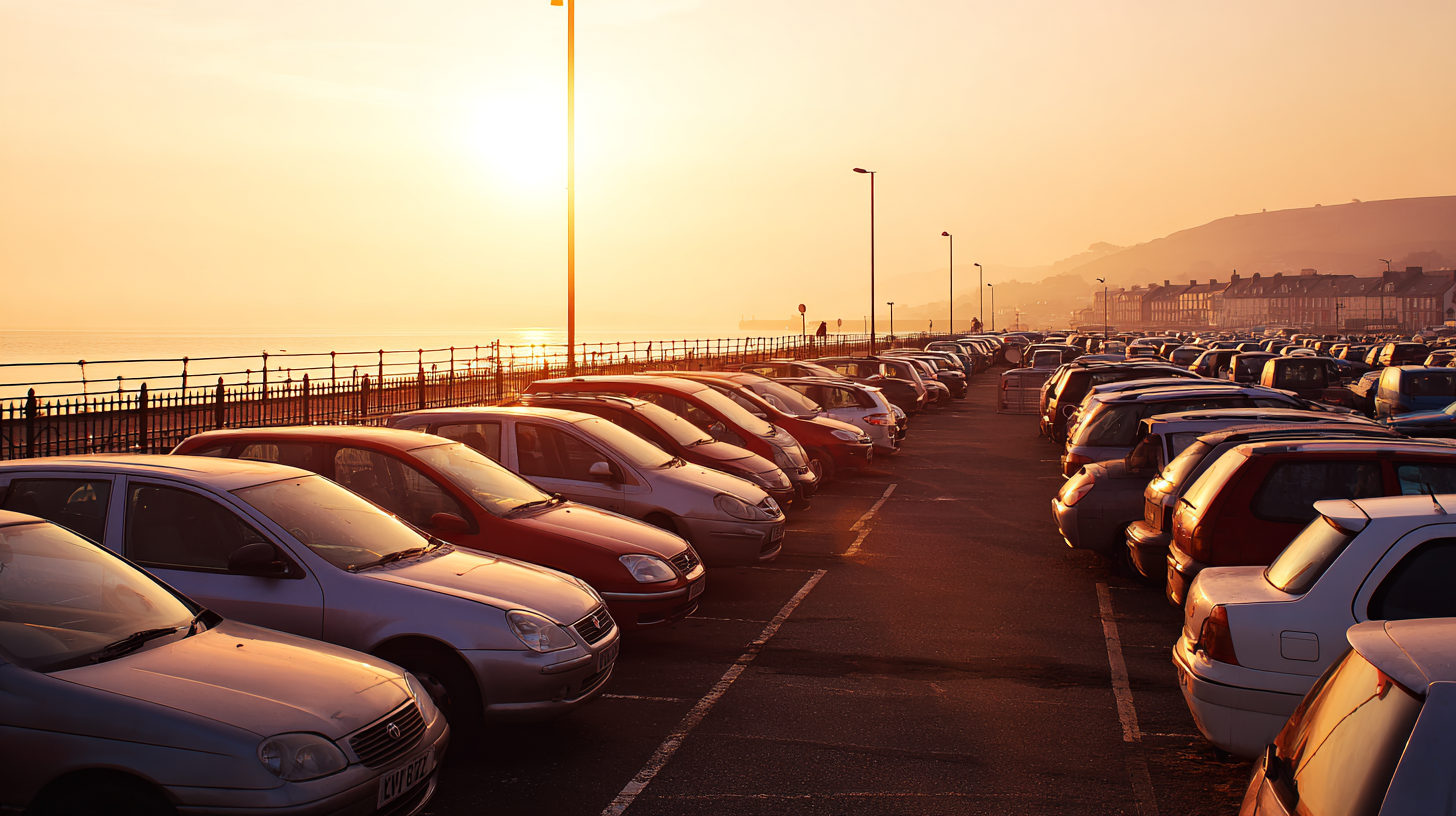
Coastal car parks vary enormously. Some are quiet, dark and well-positioned. Others are busy until late, attract groups, and have lighting that never goes off.
The better coastal spots tend to be smaller car parks away from main beach access points. National Trust and similar managed coastal car parks sometimes permit overnight stays, often for a modest fee. Check before you arrive rather than discovering a restriction at 11pm.
Coastal air is also humid, and a vehicle parked near the sea overnight will accumulate condensation faster than almost any other environment. Good ventilation is essential. The Car Camping Condensation: Causes and Solutions article on this site covers that in detail.
Window Covers And Blackout Solutions
Window covers are the single most important privacy upgrade for vehicle sleeping. They block exterior light from coming in, prevent anyone from seeing inside, and in cold weather add a layer of insulation to the glass.
The options range from DIY Reflectix panels cut to each window shape through to custom-fit magnetic covers for specific vehicle models. A full breakdown of the options, costs and trade-offs is in the Best Window Covers For Vehicle Camping guide. For privacy purposes, the short version is:
Silver foil-backed panels are most effective for light blocking and insulation but are the most obvious from outside. They work well in rural locations where visibility from outside is less of a concern.
Dark fabric covers or curtains are less effective for insulation but look much more natural from outside, particularly on rear windows. In residential or urban settings, they attract far less attention.
Magnetic covers in dark colours sit in the middle. They go up quickly, hold well, and look relatively normal on door windows.
The front windscreen is the most important window to cover and the one most often forgotten. It's the largest glass surface and the most visible from outside. Cover it, and if you're parked anywhere people might walk past, ensure the outward-facing side is dark rather than reflective silver.
Using Factory Privacy Glass
Many modern SUVs and estates come with factory-tinted privacy glass on the rear windows. This reduces daytime visibility into the vehicle, which is useful. At night it does not block light coming in from outside and provides no insulation. Factory privacy glass changes which windows to prioritise but doesn't replace covers.
If your vehicle has privacy glass on the rear side windows, those windows need less attention for daytime discretion but still benefit from covers at night. The front windows and windscreen remain clear glass on almost every vehicle and need covering regardless.
Interior Organisation And Keeping A Low Profile
How the inside of the vehicle looks through the glass matters as much as how well-covered the windows are.
Before settling in, gear that isn't needed should be stored out of sight. Bags on seats, food packaging on the dashboard, and clothing spread around the interior all signal that the vehicle is occupied and being lived in. A tidy vehicle interior with nothing visible on the seats reads as an empty car from outside. That's the aim.
For couples and families, this is more challenging because there's more gear. Using compression bags for sleeping equipment, keeping a single organised bag for essentials, and having a clear system for what goes where makes the difference between a functional setup and a chaotic one that takes twenty minutes to sort every night.
We found exactly the same thing when developing our VW Golf Estate sleeping setup. The sleeping arrangement itself was easy; creating a repeatable system for where everything lived turned out to be the harder challenge.
Lighting Mistakes That Attract Attention
Interior lighting is one of the most common privacy mistakes in vehicle sleeping.
A light on inside a vehicle at night is visible from a significant distance. Most beginners arrive, turn on the interior light, sort out gear, make something to eat, and organise the sleeping setup, before eventually putting the covers up and switching off. By that point, anyone nearby knows exactly what's been happening.
The solution is simple. Fit the window covers first, before any interior light goes on. With covers fitted, you can use a dim head torch or a small camping lantern inside without any light escaping.
Small LED lanterns with a warm dim setting are far better than interior vehicle lights for vehicle camping. A head torch with a red light mode is useful for anything requiring directed light without illuminating the whole vehicle.
Arriving Late And Leaving Early
Two habits that experienced vehicle campers develop quickly and that make a significant difference.
Arriving late means arriving when most other people have already settled for the evening. A vehicle pulling into a quiet residential street at 11pm and parking up attracts much less attention than one arriving at 8pm and sitting there for three hours. Late arrival also means less time sitting in the vehicle before sleep.
Leaving early means being on the road before most people are up. Before 7am in most locations, almost nobody is about. You've had your sleep, you're ready to go, and there's no period of people arriving and noticing you were there.
Together, these two habits reduce the visible window of your overnight stay significantly. Arrive late, leave early, and in between you're just a parked car.
How Couples And Families Handle Privacy
Two people or a family in a vehicle changes the privacy calculation. More people means more gear, more time to set up, and a more visible presence. This isn't a reason not to do it, but it's a reason to be well organised.
The setup needs to be practised before it's needed. Do a dry run at home. Everyone should know what they're doing before you arrive at the overnight location. Ten minutes of fumbling around in a car park in the dark with children who need to sleep is not a good start.
For families, campsites are often the easiest option, but vehicle sleeping works well too once the setup has been practised and everyone knows their role. The cost is higher than a free overnight stop, but the facilities and ease of the setup more than compensate on nights when simplicity matters.
For couples, the setup is much more manageable. Two people in an estate or SUV can be set up and settled within fifteen minutes with practice. The How To Sleep Comfortably In A Small Car and How To Travel Without Paying For Hotels guides on this site cover couple-specific considerations in more detail.
What To Do If Somebody Knocks On The Window
This happens occasionally and is almost always straightforward.
It's usually a security officer, a police officer, or occasionally someone checking you're alright. Stay calm, be polite, and be honest. You're sleeping in your car, which is not illegal in most UK situations. If a security officer asks you to move on, do so without difficulty. Police interactions are typically brief and unremarkable. Members of the public who knock are usually just concerned, and a quick reassurance is all that's needed.
Have a backup location in mind so that if you are asked to move, you're not making decisions at midnight.
The anxiety around this is usually worse than the event itself. It happens occasionally to most vehicle campers and is rarely more than a brief and perfectly civil exchange.
Common Privacy Mistakes
Not covering the rear windscreen. People focus on the side windows and forget the back. Early morning light comes from all directions.
Covering windows after turning the interior light on. Anyone nearby has already seen everything by the time the covers go up.
Choosing a spot that seems private but isn't. A lay-by that's quiet at 10pm can have a lorry parked next to you at midnight. Avoid motorway-adjacent spots and known lorry stopping points.
Leaving the engine running after parking. Exhaust visible from outside, engine noise, and active lights all signal occupation. Park, switch off, and move quietly into the sleep setup.
Parking on private land. A brief check that you're on a public road or legitimate overnight location avoids being asked to move at midnight.
A Simple Privacy Setup For Most Travellers
For anyone starting out, this is a practical baseline that handles most situations.
Window covers: a full set of Reflectix or similar panels cut to fit every window including the rear windscreen. For urban locations, cover the outward-facing side of the front panel with dark fabric.
Lighting: a small dim LED lantern and a head torch with a red mode. No interior vehicle lights once you've arrived.
Arrival and departure: aim to arrive after 9pm and leave before 7am where possible.
Gear: everything stored out of sight in the boot before you settle in. Nothing visible on the seats.
Location: a quiet residential street, a rural lay-by, or a campsite. Avoid busy services or town centre car parks unless there's no alternative.
That setup handles the vast majority of overnight stops comfortably and can be assembled for well under fifty pounds, most of which is the window covers. Everything else is habit.
FAQ
Is it legal to sleep in your car in the UK?
In most situations, yes. Sleeping in a car on a public road or in a public car park is not illegal in the UK. Where it can become a problem is on private land without permission, or in locations with specific overnight restrictions. Pay attention to signage and choose sensible locations.
Will people notice I'm sleeping in my car?
With good window covers, a tidy interior setup, and late arrival, most people won't give your vehicle a second glance. A parked car is unremarkable. The feeling of being conspicuous is usually much stronger than the reality, particularly on the first few trips.
How do I handle needing the toilet in the middle of the night?
Find a toilet before you settle in. If you're at a motorway services or campsite, the facilities are there. For rural overnight stops, a designated container and a small folding camp trowel for emergencies cover most situations. Plan for it rather than improvising.
What if I don't feel safe in a location?
Move. Have a backup location already identified so moving on is straightforward. The best overnight spots tend to be the ones where you arrive and feel immediately settled, rather than those where you spend ten minutes convincing yourself it's probably fine.
Does vehicle sleeping work in winter?
Yes, with the right gear. Cold nights in a vehicle are manageable with an appropriately rated sleeping bag, good insulation underneath, and sensible layering. Condensation is heavier in winter and ventilation needs more attention. The How To Stay Warm While Vehicle Camping guide on this site covers the practical detail.
Final Thoughts
Sleeping in a vehicle without feeling exposed is mostly a matter of preparation and habit. The first trip is always the most uncertain. By the second or third, the setup is familiar, the locations are easier to assess, and the psychological barrier that made the whole thing feel strange has largely gone.
Vehicle sleeping is one tool that helps ordinary people travel further and more affordably. A family that sleeps in their estate for two nights of a week-long trip and uses campsites for the rest has meaningfully reduced its accommodation spend without reducing the quality of the experience. The more comfortable you become spending nights in your vehicle, the more destinations become practical and affordable.
The privacy setup described in this article costs very little and takes one afternoon to prepare. After that, it's just part of how you travel. Arrive late, cover the windows, keep things tidy, leave early. The rest sorts itself out with experience.
