
Car Camping Condensation: Causes And Solutions
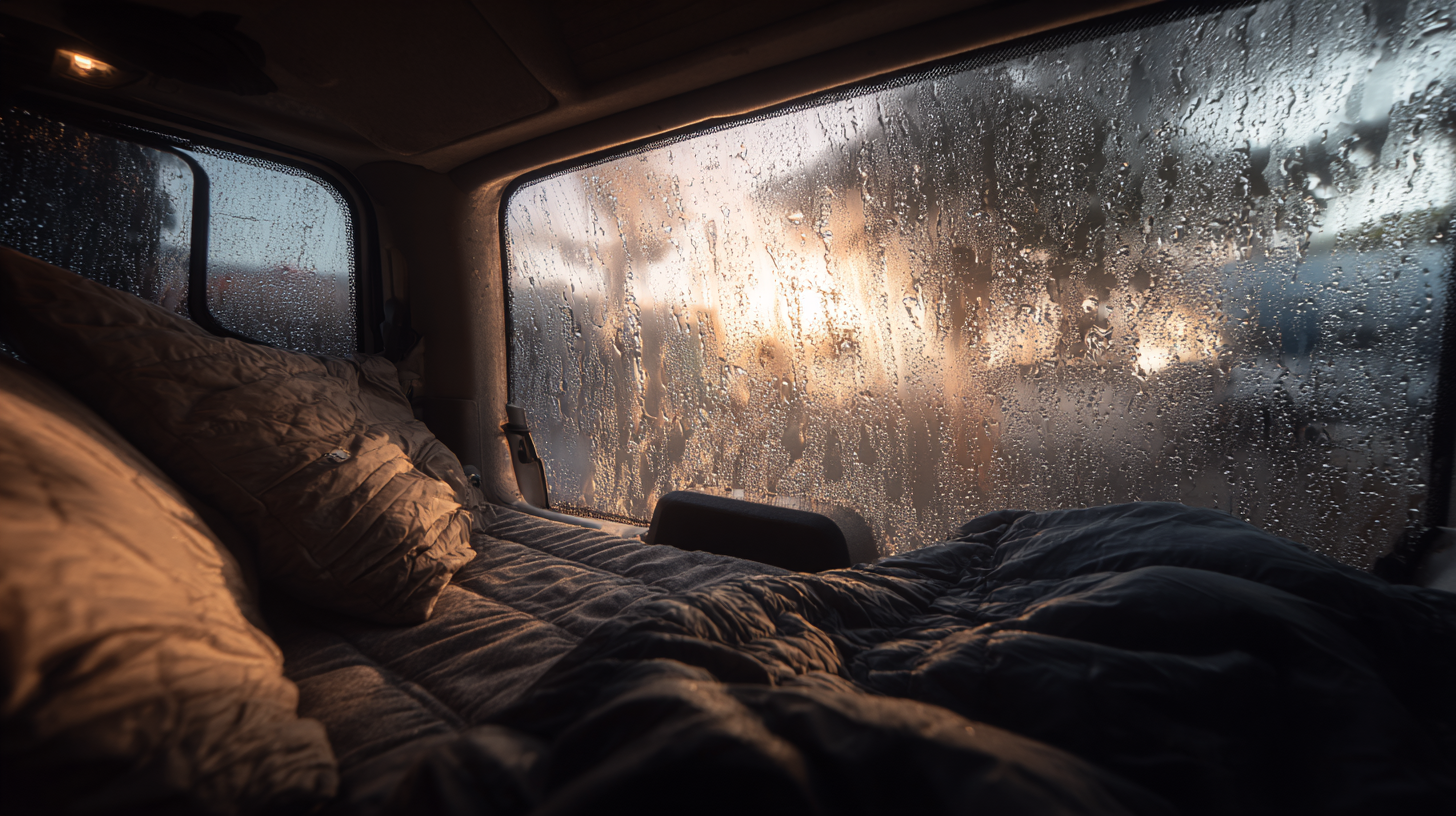
Wake up in a vehicle after a cold night and you'll often find the windows completely fogged, water droplets running down the glass, and a general dampness that wasn't there when you went to sleep. If you've never dealt with this before, it's a bit alarming. If you have, you'll know it ranges from mildly annoying to genuinely problematic depending on how cold it is and how long you're on the road.
Condensation is one of the most consistent problems in vehicle camping. It affects everyone, regardless of how good their setup is. The goal isn't to eliminate it entirely — that's not realistic — but to reduce it enough that it stops affecting your sleep quality, your gear, and your health. If you're still building your overall sleep setup, our guide on how to sleep comfortably in a small car covers the fundamentals.
What Is Condensation In A Vehicle?
Warm, moist air hits a cold surface and turns back into water. That's all condensation is. In a vehicle overnight, the cold surfaces are everywhere — windows, metal door panels, the roof lining. The warm moist air comes from you.
A single person sleeping in a car breathes out continuously through the night, and that breath is warm and full of moisture. The vehicle interior cools down as the night goes on. The moisture has nowhere to go in a sealed space, so it settles on the coldest surfaces — which in most vehicles is the glass first, then the metal panels.
It's more noticeable in cold weather because the glass gets colder faster. But it happens in mild weather too, just less dramatically.
Why Condensation Happens When You Sleep In A Car
Breathing
This is the main source. You can't do anything about it and you can't stop it — you just need to manage where that moisture ends up. One person sleeping eight hours produces a significant amount of water vapour through breathing alone. Two people roughly double it.
Wet Clothing And Gear
A damp towel left inside the car. Wet walking boots on the floor. A rain jacket thrown over the back seat. These all add moisture to the air inside the vehicle on top of what your breathing is already contributing. The combined effect is noticeably worse than breathing alone.
Weather Conditions
Rain, high humidity, coastal mist — all raise the baseline moisture level around the vehicle. On a wet autumn night parked near the coast, the air outside is already heavily laden with moisture. Some of that finds its way in. The gap between inside and outside moisture levels is smaller, which means condensation forms faster and heavier.
Cold Glass And Metal Surfaces
The colder the surface, the faster condensation forms on it. A cold night means cold glass. Cold glass means water droplets forming quickly. This is why condensation is dramatically worse in winter than summer — it's the same process, just accelerated by lower temperatures.
Why Condensation Is More Than Just An Annoyance
It's easy to dismiss condensation as something you just wipe off in the morning. Over a short trip, that's broadly true. Over several nights, or if you're not managing it, the effects stack up. This becomes especially important when you're using vehicle sleeping to reduce accommodation costs on longer trips.
Damp Sleeping Bags
A sleeping bag that absorbs moisture night after night loses insulating performance. Down is particularly vulnerable — clumped wet down provides almost no warmth. Synthetic recovers better when dried but still performs poorly when damp. A sleeping bag that never fully dries between uses is one of the most common reasons people get progressively colder on multi-night trips even when nothing else changes. Keeping your bedding dry is one of the keys to staying warm. Our guide on how to stay warm while vehicle camping explains the wider sleep system in more detail.
Wet Clothing
Clothing stored inside a damp vehicle absorbs ambient moisture. You get dressed in the morning into clothes that feel slightly cold and clammy. In mild weather that's unpleasant. In cold weather, starting the day in damp clothes is a real problem. Pillows can also absorb moisture surprisingly quickly during multi-day trips. Our guide to the best camping pillows for car camping explains which types cope best with regular vehicle travel.
Mould And Bad Smells
A vehicle that's consistently damp and never properly aired will start to smell within a few days. Mould can establish itself in fabric seats, carpet, and soft furnishings surprisingly quickly in warm, moist conditions. This is more of a concern on longer trips or for people using their vehicle regularly for camping.
Reduced Visibility In The Morning
If you need to drive early, heavily fogged windows need clearing before you can go anywhere. In winter this can mean waiting for the heater to work through thick condensation on every glass surface, inside and out. It's a minor inconvenience but a consistent one.
How To Reduce Condensation While Sleeping
There's no single fix that eliminates condensation. The approach is a combination of things, most of which cost nothing.
Crack Windows Properly
A single window cracked slightly helps a little. Two windows cracked on opposite sides of the vehicle helps a lot more. The difference is airflow — one cracked window creates a small vent, but two on opposite sides creates a path for moist air to move through and out.
The windows don't need to be open much. A centimetre or two is enough to make a difference without making the interior significantly colder. In very cold weather, this is a genuine trade-off — some ventilation versus retaining more heat. Most of the time, the ventilation is worth it.
Ventilation decisions should always be considered alongside privacy and security.
Create Cross Ventilation
Cross ventilation means airflow moving through the vehicle rather than just sitting in it. Front and rear windows on opposite sides, or a rear window and a front door window, work better than two windows on the same side. If your vehicle has any kind of roof vent or pop-up roof, even partially open it significantly improves airflow.
In practice, experiment with what your vehicle allows. Some cars let you leave a rear quarter window cracked independently of the main window, which is useful for ventilation without as much heat loss.
Keep Wet Gear Out Of The Sleeping Area
Any wet or damp items inside the vehicle add to the moisture load. Rain gear, wet footwear, damp towels — these should be stored in a sealed bag or, if possible, in the boot away from the sleeping space. Even better, leave them outside in a dry bag if the weather allows and security isn't a concern.
This is one of those practical changes that makes a noticeable difference. The gap between a vehicle with two people's wet gear spread around the interior and the same vehicle with wet gear contained in sealed bags is significant.
Dry Clothing Before Bed
If your base layers or sleep clothes are even slightly damp from the day, change into something dry before bed. The clothing you sleep in sits against your skin for eight hours. If it's damp at the start, you're adding moisture to the sleeping environment from the inside rather than just from your breath.
This sounds obvious but it's easy to skip when you're tired and it's cold outside your sleeping bag.
Avoid Overheating The Interior
This sounds counterintuitive, but a very warm vehicle interior before bed actually makes condensation worse. Warm air holds more moisture. When the car cools down — which it will, usually within a couple of hours — all that moisture has to go somewhere. It lands on your windows and walls.
Getting into a cold-ish vehicle and warming it gradually with body heat, with ventilation in place, produces less condensation than heating it up and then sealing it.
Common Condensation Mistakes
Sealing the vehicle completely. The instinct when it's cold is to close everything tight. This makes condensation significantly worse. A sealed car with one sleeping person in it will be heavily fogged within a few hours.
Opening just one window on one side. Better than nothing, but less effective than cross ventilation. People often crack a window nearest their head and leave everything else closed.
Drying out gear by spreading it inside the vehicle. Hanging a wet jacket from a headrest or laying a damp towel across the back seat to dry overnight adds that moisture to the air. It doesn't dry the gear — it just moves the moisture into the interior.
Assuming condensation means rain got in. First-time vehicle campers often think their car has a leak when they wake up to water running down the windows and wet surfaces. It's almost always condensation, not a leak. A leak produces water in specific places — at window seals, around the boot seal. Condensation is uniform across all glass surfaces.
Not wiping down before bed if it's already damp inside. If you've been in the vehicle with wet gear and damp clothing all afternoon, the interior is already humid before you sleep. Taking two minutes to wipe down the glass with a microfibre cloth before settling in reduces the baseline.
Packing the sleeping bag immediately in the morning. A sleeping bag that's absorbed overnight moisture needs airing before it gets stuffed into its sack. Even fifteen minutes draped over the outside of the vehicle in dry air makes a difference over a multi-day trip.
Different Conditions And What To Expect
Condensation varies a lot depending on the season and location. Knowing what to expect helps you prepare.
Summer
Condensation is less severe in summer, but still present. Warm nights mean warmer glass, which means moisture doesn't settle as fast. The main summer condensation scenario is early morning — the temperature drops in the hours before dawn, glass cools quickly, and you can wake up to more condensation than you expected given how warm the night felt.
Autumn
Autumn is when most people first encounter serious condensation. Nights get cold and damp fast. High humidity is common across much of the UK from September onwards. An October night in a rural lay-by can produce heavy condensation even with reasonable ventilation. Expect it, plan for it, and prioritise keeping your sleeping bag dry.
Winter
Winter condensation is heavy and can be relentless on multi-night trips. The glass gets cold fast and stays cold. In genuinely cold weather, moisture freezes on the windows rather than running off — you wake up with ice on the inside of the glass. This is normal in very cold conditions and not a sign that anything has gone wrong, but it does mean your sleeping environment has been cold and damp overnight.
Managing this in winter is mainly about not letting moisture accumulate over successive nights. Air everything out each morning. Keep wet gear separate. Accept that some condensation is inevitable and focus on protecting your sleeping bag and clothing from it.
Coastal Locations
Coastal camping produces the worst condensation of any environment. High humidity, salt air, frequent onshore wind carrying mist — the moisture levels around a coastal vehicle at night are significantly higher than inland. Condensation forms faster and more heavily. Windows can be running with water by midnight.
At a coastal location, the ventilation approach needs to be more aggressive. Both windows well cracked, wet gear absolutely outside or sealed away, and a microfibre cloth very much within reach for the morning. Coastal condensation is the scenario that turns a manageable problem into a soaking-wet sleeping bag if you're not prepared.
Mountain And Upland Areas
High ground brings cold temperatures, low cloud, and high humidity. The condensation profile is similar to coastal — heavy and fast. The additional factor is that mountain locations often have wind, which helps ventilation naturally if you crack the right windows. A vehicle parked broadside to the wind will ventilate better than one in a sheltered hollow where air sits still all night.
Does Parking Location Matter?
Yes, more than most people realise. Condensation is easiest to manage when you're parked somewhere suitable and legal. Our Country-By-Country Guide explains where overnight vehicle sleeping is generally permitted.
Motorway services are convenient but tend to be damp environments — large amounts of traffic, exhaust moisture, often located in low-lying ground where mist collects. The artificial lighting means it never feels as cold as it actually is, which catches people out. Condensation is typically average to heavy.
Rural lay-bys vary. An open lay-by on a hilltop with a breeze will have less condensation than a lay-by at the bottom of a valley where cold air and moisture pool overnight. Sheltered is better for warmth, but open with a light breeze is better for condensation. It's a trade-off you'll navigate based on conditions.
Coastal car parks — already covered, but worth repeating: these produce the heaviest condensation of any typical UK overnight stop. The combination of salt air, high humidity and cool glass is about as bad as it gets for moisture management.
Forest and woodland car parks sit somewhere in the middle. Tree cover provides shelter and reduces wind, which is good for warmth. But still, humid air and lack of airflow around the vehicle means moisture builds up in the interior faster than in open locations. Early morning mist in woodland is common, which adds to the effect.
Residential streets in towns and villages tend to have less extreme condensation because ambient temperatures are slightly higher than open countryside, and humidity is usually lower. For vehicle campers doing overnight stops in urban areas, condensation is typically less severe — though not absent.
Products That Can Help
None of these are essential, but each has a practical use.
Window vents and rain guards — these fit into the top of a partially open window and allow you to crack the window without rain coming in. Very useful in the UK where leaving a window open overnight often means getting rained on. They're relatively inexpensive and make it much easier to maintain cross ventilation in wet weather.
Microfibre cloths — genuinely useful. A quick wipe of the windows before you sleep removes existing surface moisture, which slows condensation formation. In the morning, wiping down the glass before it drips onto your kit takes thirty seconds. Keep one accessible, not buried in a bag.
Moisture absorbers — small tubs or bags containing calcium chloride or silica gel. These are sold in pound shops and DIY stores. They won't solve a condensation problem on their own, and a single tub in a vehicle with two sleeping people is a drop in the ocean. However, as a background measure over several nights they do reduce ambient humidity slightly. On longer trips they're worth using. Replace or recharge them regularly — once they're saturated they do nothing.
Breathable window covers — some vehicle campers make their own insulation for windows using reflective foam or car window covers. Non-breathable materials like reflective foil increase condensation on the glass behind them because air can't circulate. If you're covering windows for privacy or light blocking, breathable fabric or covers that don't seal completely against the glass work better from a moisture perspective. If you're choosing covers primarily for privacy, darkness and temperature control, see our guide to the best window covers for vehicle camping. If privacy is your biggest concern, our guide on how to sleep in your car without feeling exposed covers overnight locations, window covers and practical ways to feel more comfortable sleeping in a vehicle.
Simple Condensation Setup For Most Vehicle Campers
This handles condensation well in most UK conditions without any specialist gear:
- Two windows cracked slightly on opposite sides of the vehicle — front passenger and rear opposite, or equivalent
- All wet clothing and gear stored in a sealed bag, ideally in the boot away from the sleeping area
- Change into dry sleep clothes before bed
- One microfibre cloth kept accessible — wipe windows before bed and again in the morning
- One or two small moisture absorber tubs placed in the vehicle interior
- Sleeping bag aired out each morning before packing, even briefly
That's it. None of it costs much. This is broadly the approach we used in our VW Golf Estate sleeping setup, combining cracked windows, overnight ventilation and a repeatable sleeping system. The discipline of doing it consistently, particularly on multi-day trips, is the actual challenge.
FAQ
Will cracking the windows make the vehicle too cold to sleep in?
In mild conditions, no — a centimetre or two of window gap makes very little difference to interior temperature but noticeably reduces condensation. In cold weather it's a genuine trade-off. Most people find that slightly cooler air with ventilation is more comfortable than a warm, damp sealed vehicle. The answer is usually a well-rated sleeping bag rather than a sealed car.
Why is condensation worse on some nights than others?
Outside humidity, temperature, how many people are in the vehicle, whether wet gear was brought inside — all of these vary night to night. A dry inland night in June with one person and no damp gear will produce minimal condensation. A wet coastal night in October with two people and wet walking gear inside will produce a lot. The variables compound.
My windows are wet but it only seems to be in specific places — is that a leak?
Possibly. Condensation is uniform across all glass surfaces. If water is appearing specifically at door seals, around the boot edge, or on the floor in localised patches, that's more likely to be a leak than condensation. Run your finger along window seals when it's dry outside to check for gaps or perishing rubber.
How do I dry a sleeping bag that's got damp from condensation?
Air it as soon as possible — ideally outside in dry moving air, or draped over the vehicle in sunshine. For synthetic bags, a tumble dryer on low heat works well. For down bags, a dryer on low with a couple of clean tennis balls helps break up clumped down as it dries. Never store a damp sleeping bag compressed — it encourages mildew and damages the insulation over time.
Does vehicle insulation help with condensation?
Indirectly. Insulated panels reduce how cold the metal surfaces get, which means moisture is slower to settle on them. This is one of the reasons converted campervans with proper insulation have less severe condensation than bare metal vehicles. For most car and estate campers, full insulation isn't practical, but even a layer of reflective foam over the metal boot sides and roof makes some difference on cold nights.
Can condensation cause long-term damage to a vehicle?
Consistent dampness over time can contribute to mould in upholstery and carpet, and in older vehicles with compromised seals, to rust. For occasional vehicle camping, it's not a concern. For people who sleep in their car regularly for extended periods, making sure the vehicle dries out thoroughly between trips — parking in sun with windows open where possible — prevents any cumulative damage.
Final Thoughts
Condensation is a permanent feature of sleeping in a vehicle. It doesn't mean your setup is wrong — it means you're breathing, which is hard to avoid.
The practical approach is simple: ventilate consistently, keep wet gear out of the sleeping area, dry things out in the morning, and protect your sleeping bag from absorbing ambient moisture night after night.
Get those habits in place and condensation goes from being a problem that ruins kit and disrupts sleep to something you wipe off the windows every morning without much thought.
Solving practical problems like condensation makes vehicle travel more enjoyable and sustainable over the long term.
Ventilation is one of the practical considerations we assess before any overnight vehicle trip.
