
How We Sleep Two People In A VW Golf Estate (Without Building A Platform)
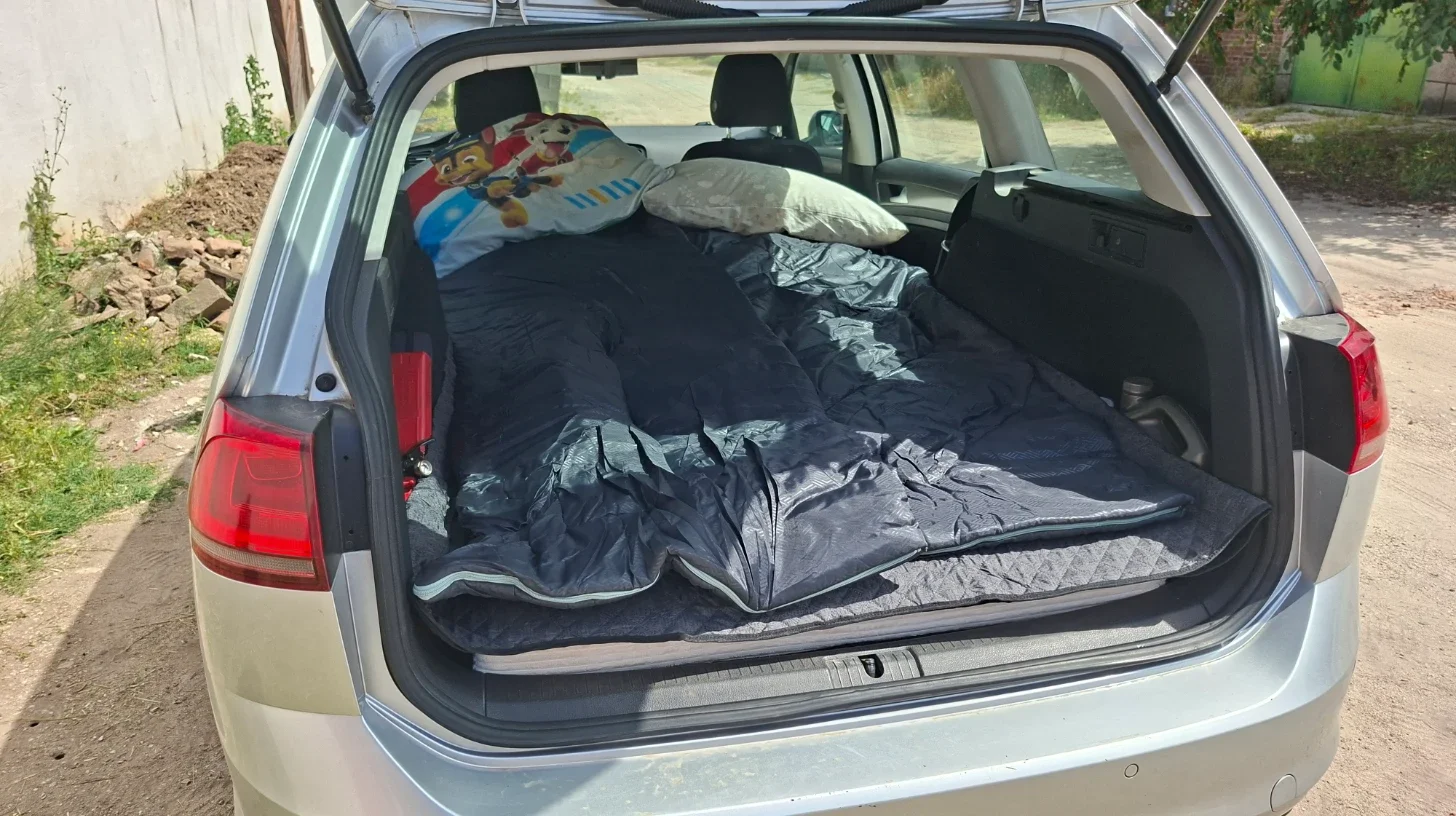
Most vehicle camping content assumes you own a van, an SUV, or something with a name like Transporter or Berlingo on the back. We don't. We have a 2014 VW Golf Estate, the kind of car that does the school run, carries the shopping, and occasionally gets covered in dog hair on the way back from a walk.
What we wanted was a way for the two of us, father and son, to sleep comfortably in that car without spending thousands of euros converting it into something it isn't. No plywood. No drawers. No drilling. Nothing that turns an ordinary family estate into a part-time camper.
This isn't really about the car. It's about karting weekends, basketball trips to Thessaloniki, race meets in Kyustendil, a planned shakedown trip to Veliko Tarnovo, and the wider European travel we're already talking about. None of that needs the Golf to sleep two people. But all of it gets cheaper and more flexible if it can.
The result is a setup that converts from driving mode to sleeping mode in 3 minutes 48 seconds, timed on the driveway, using nothing that wasn't bought off the shelf and nothing that can't be removed in an afternoon.
This is the story of how that setup came together, what it solved, and what it hasn't solved yet.
The Design Rules
Before buying anything, we set some rules.
The car still had to work as a car. Shopping, the school run, the dogs, everything a Golf Estate does the other fifty weeks of the year when it isn't sleeping two people in a lay-by somewhere in the Balkans. Nothing permanent. Nothing that traded everyday usefulness for occasional weekend capability.
It also had to be affordable, for a specific reason rather than a vague budgeting instinct. Every euro spent on unnecessary vehicle modification is a euro that doesn't go toward fuel, race tickets, or whatever the next trip turns out to be. The car is the tool, not the project. The goal is maximising experiences per euro spent, and a sleeping setup only earns its place if it serves that goal rather than becoming one of its own.
The Problem With Most Car Camping Setups
Spend any time looking at car camping content online and you'll find plywood platforms, custom drawer systems, and full conversions that take a weekend with a circular saw and produce something that looks, by the end, more like a camper than a car.
That approach has its place for someone sleeping in their vehicle every week. It didn't fit what we needed. We sleep in the Golf for specific trips, not as a way of life, and the rest of the time it needs to be a normal car with a normal boot. A plywood platform sitting permanently in the back, requiring removal every time we needed to carry something bulky, was the opposite of what this project was for.
So the brief became a no-build solution. Nothing fixed. Nothing that couldn't be unpacked, deployed, and packed away again, repeatedly, without tools.
No Platform, No Build, No Conversion
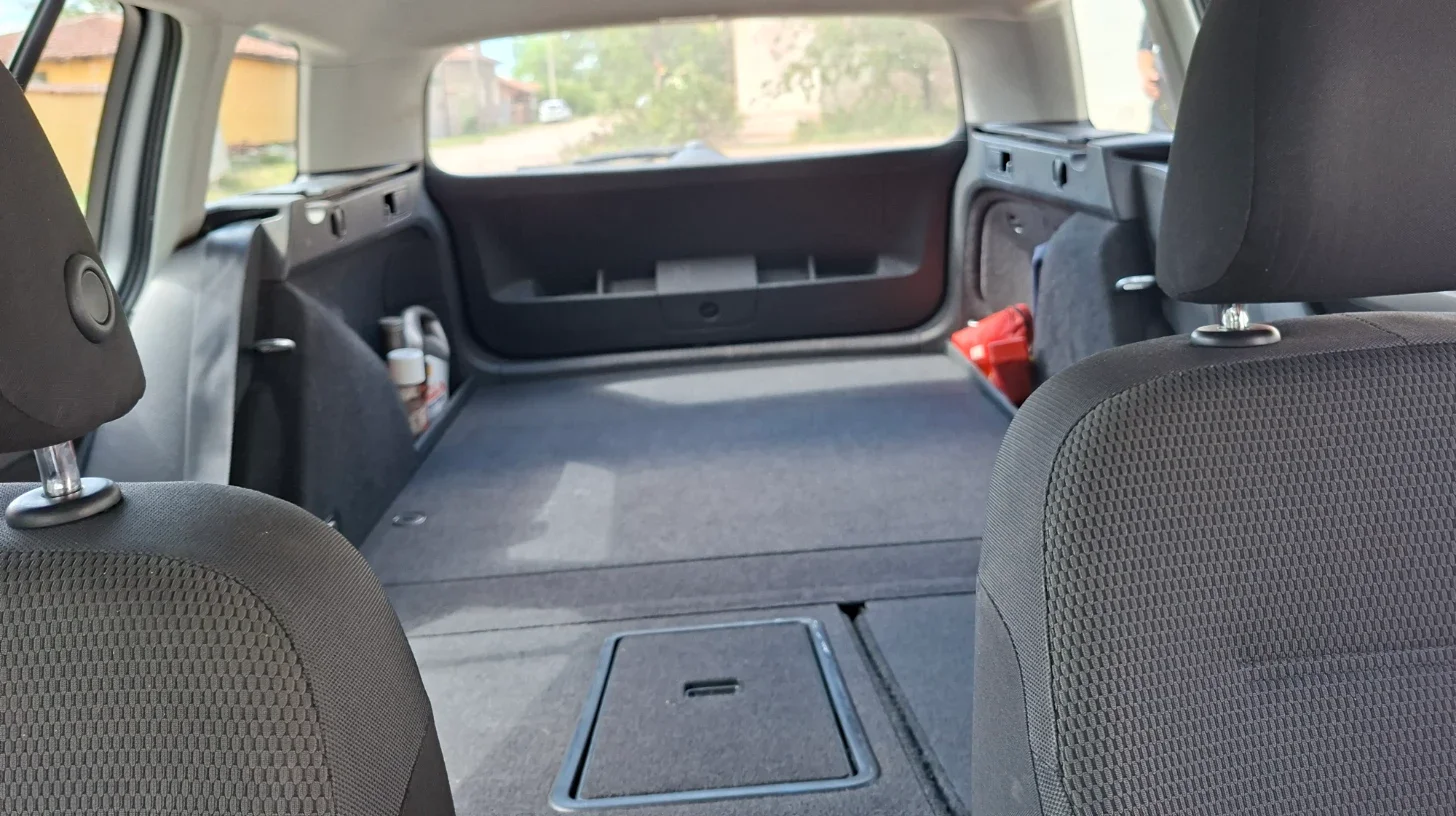
The entire setup relies on three things: the rear seats folding down, a folding foam mattress filling the resulting space, and a simple, repeatable system for organising everything else.
No structural additions. No cutting. No bolting anything to the chassis.
Keeping it this simple wasn't really about cost, although cost mattered. It was about whether the system would actually get used. An elaborate build that needs twenty minutes of fiddling gets used twice and then abandoned. A simple system that takes under five minutes becomes routine, and routine is what actually enables more trips.
With the front seats moved forward, folding the rear seats down creates a sleeping area of approximately 190 cm in length. The narrowest point, between the wheel arches, is approximately 100 cm wide. Tight for two people lying side by side, but workable for a father and son with a sensible mattress.
Problem 1: Sleeping Comfort
The mattress was the first real decision, and the first real disagreement with most car camping advice.
Inflatable mattresses are the default recommendation almost everywhere. They pack down small and they're cheap, but they puncture, slowly deflate overnight, and need inflating and deflating every single time.
We went with a folding foam mattress instead. It arrived vacuum-packed into a surprisingly small, dense parcel.
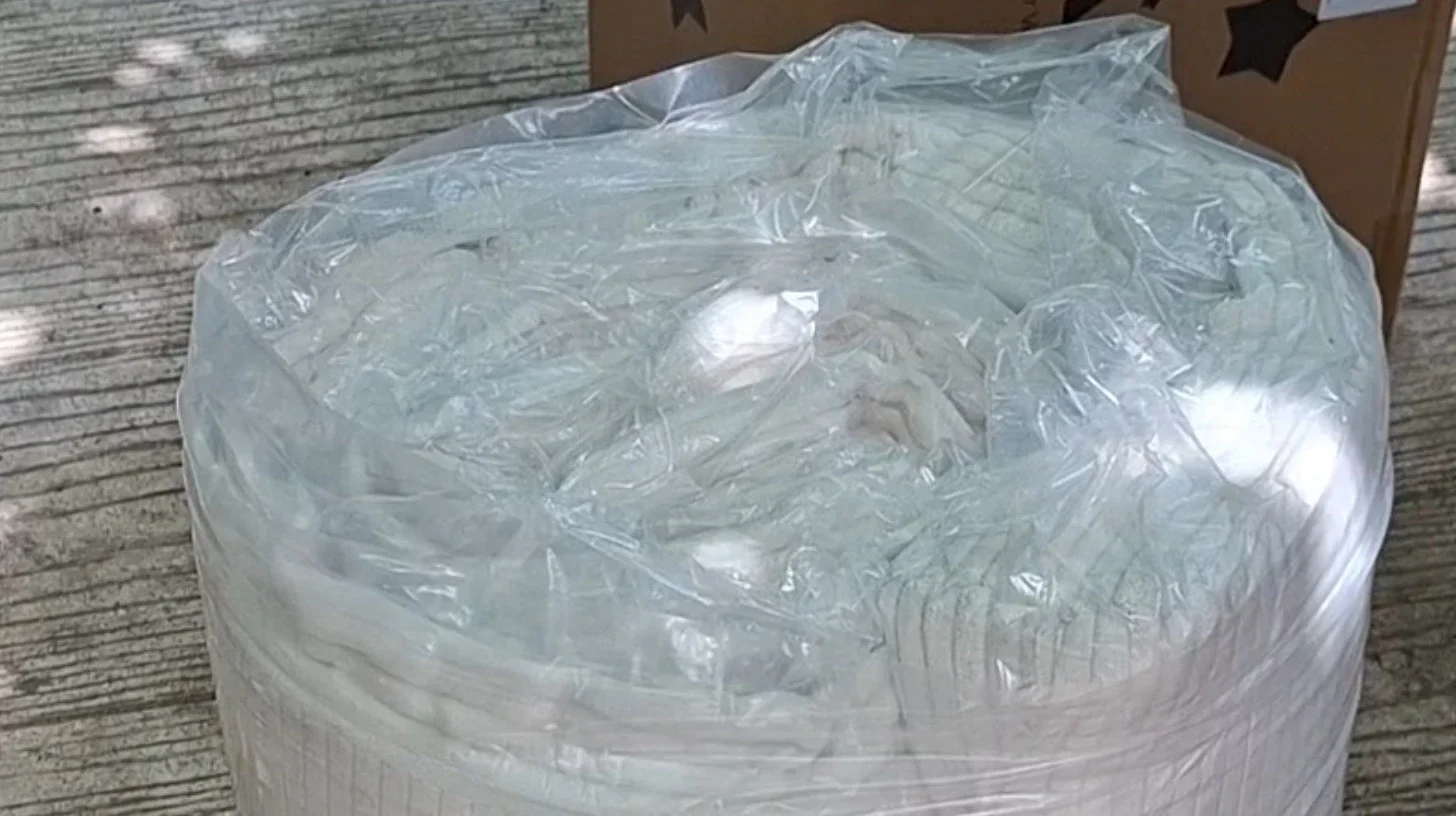
I'd expected to leave the mattress for hours to expand properly, but it was almost at full size as soon as the packaging came off. It settled a little more over the next day, but the vast majority of the expansion happened straight away.
The folding design collapses into thirds, similar to a large sofa cushion, with no inflation step at all. Lay it out, unfold it, done. No valve, no pump, no risk of waking up on the floor of the boot because something lost air overnight.
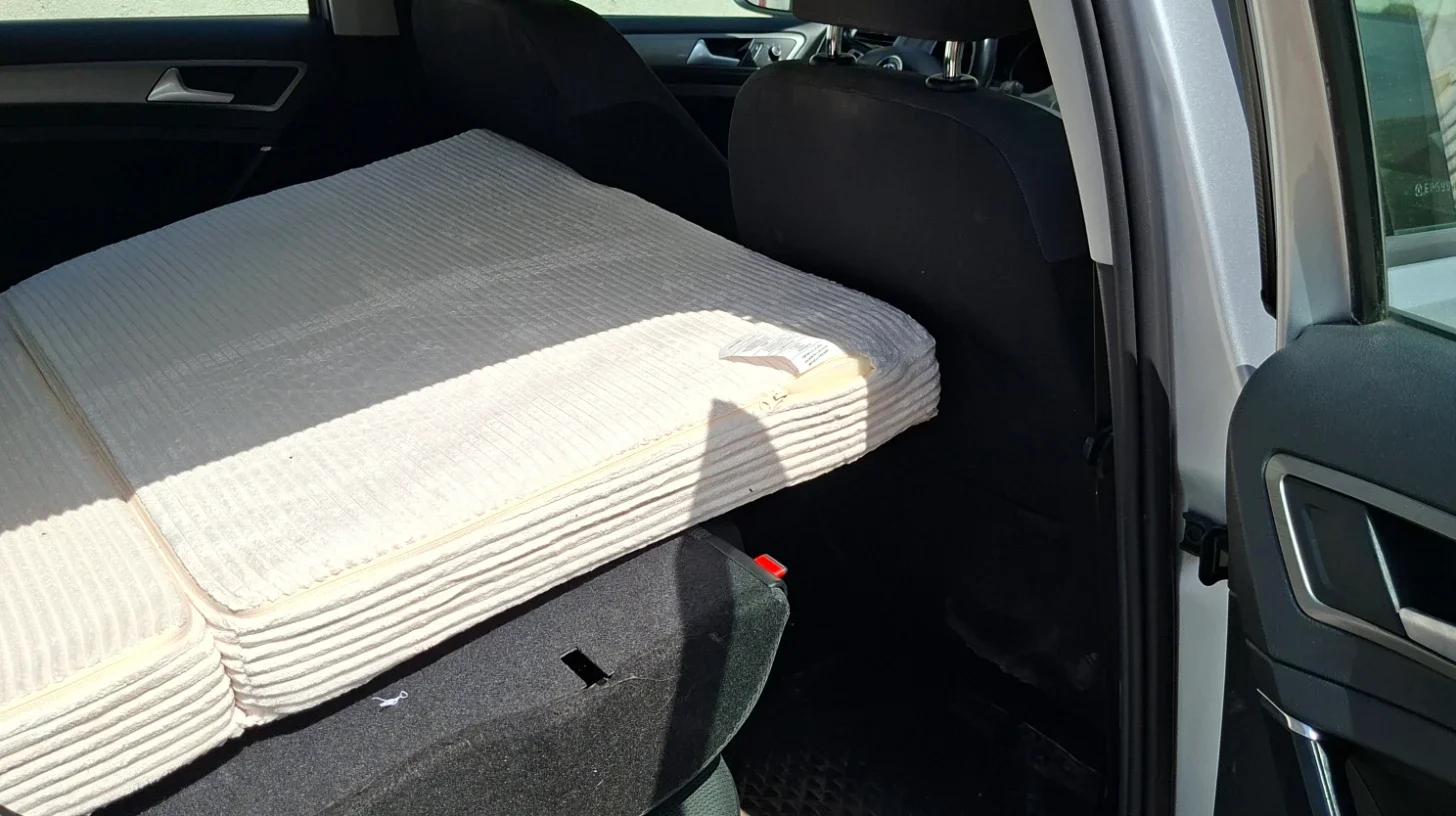
It isn't a mattress from home and nobody should expect that. But it's flat, consistent, and doesn't develop the slow soft spots inflatables tend to get after a few uses.
Problem 2: Privacy
The front and rear side windows were straightforward. Purpose-made covers for the Golf Estate fit those windows precisely, which matters more than it sounds. A generic, non-fitted cover leaves gaps, and gaps mean light gets in and anyone outside can see exactly what's happening inside.
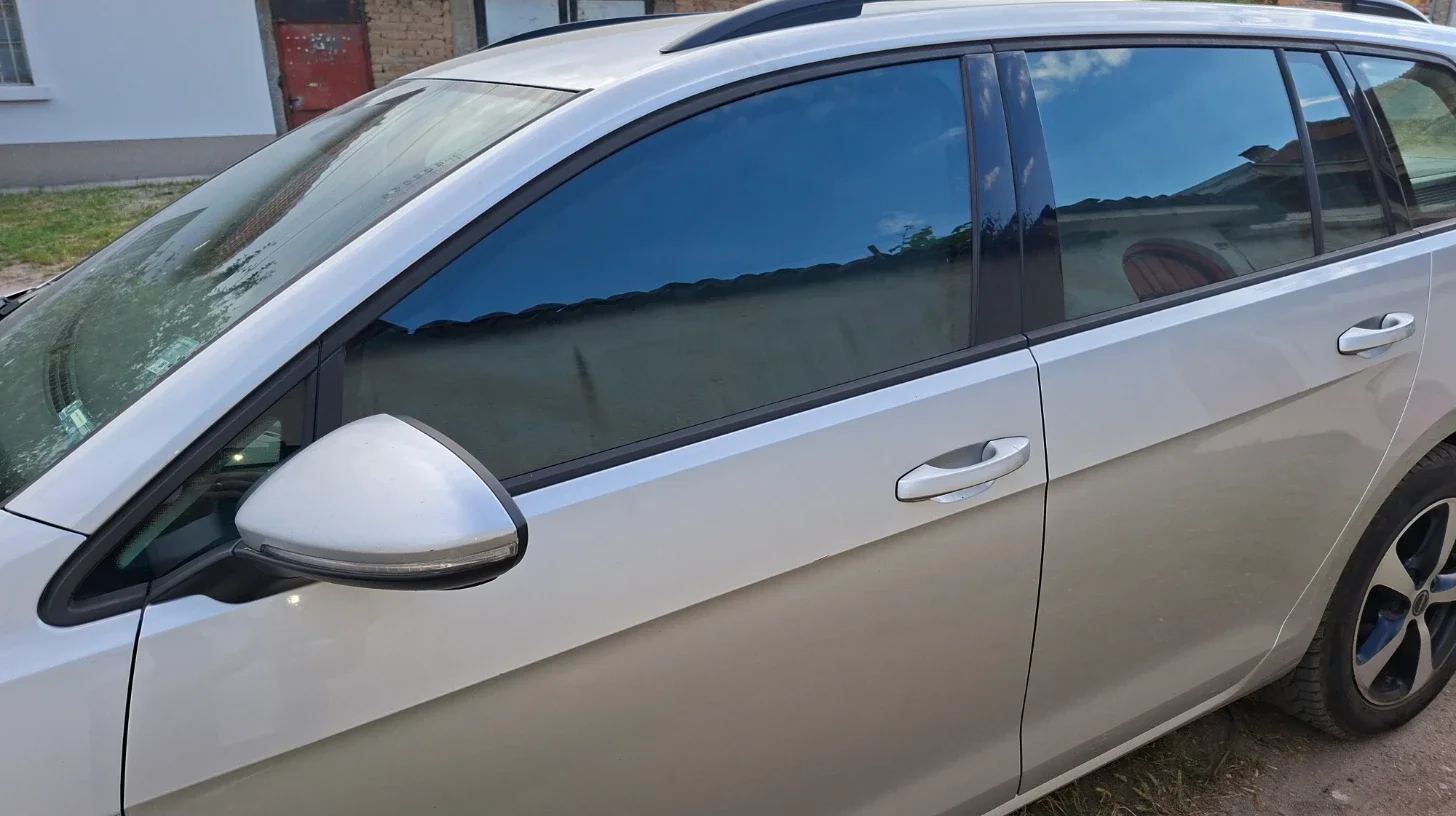
The windscreen, rear hatch window, and rear quarter windows were a different matter, and the original plan to use Reflectix didn't survive contact with reality. It turns out to be difficult to source locally in Bulgaria, so the approach changed.
What actually happened was a templating exercise. Full-size paper templates were built directly on the glass, sheet by sheet, held in place with masking tape. The rear quarter windows were relatively straightforward. The rear hatch window was significantly harder, mostly because gravity kept pulling the paper away from the glass while working with the tailgate open above us.
The templates are deliberately not perfect. The plan is to transfer them to corrugated cardboard, test fit the cardboard versions, and once the fit is right, cover them in black duct tape and use them as the finished article. Chasing a perfect paper template turned out to be far less useful than getting a good enough one to produce a workable cardboard prototype. Good enough and movable beat perfect and stuck.
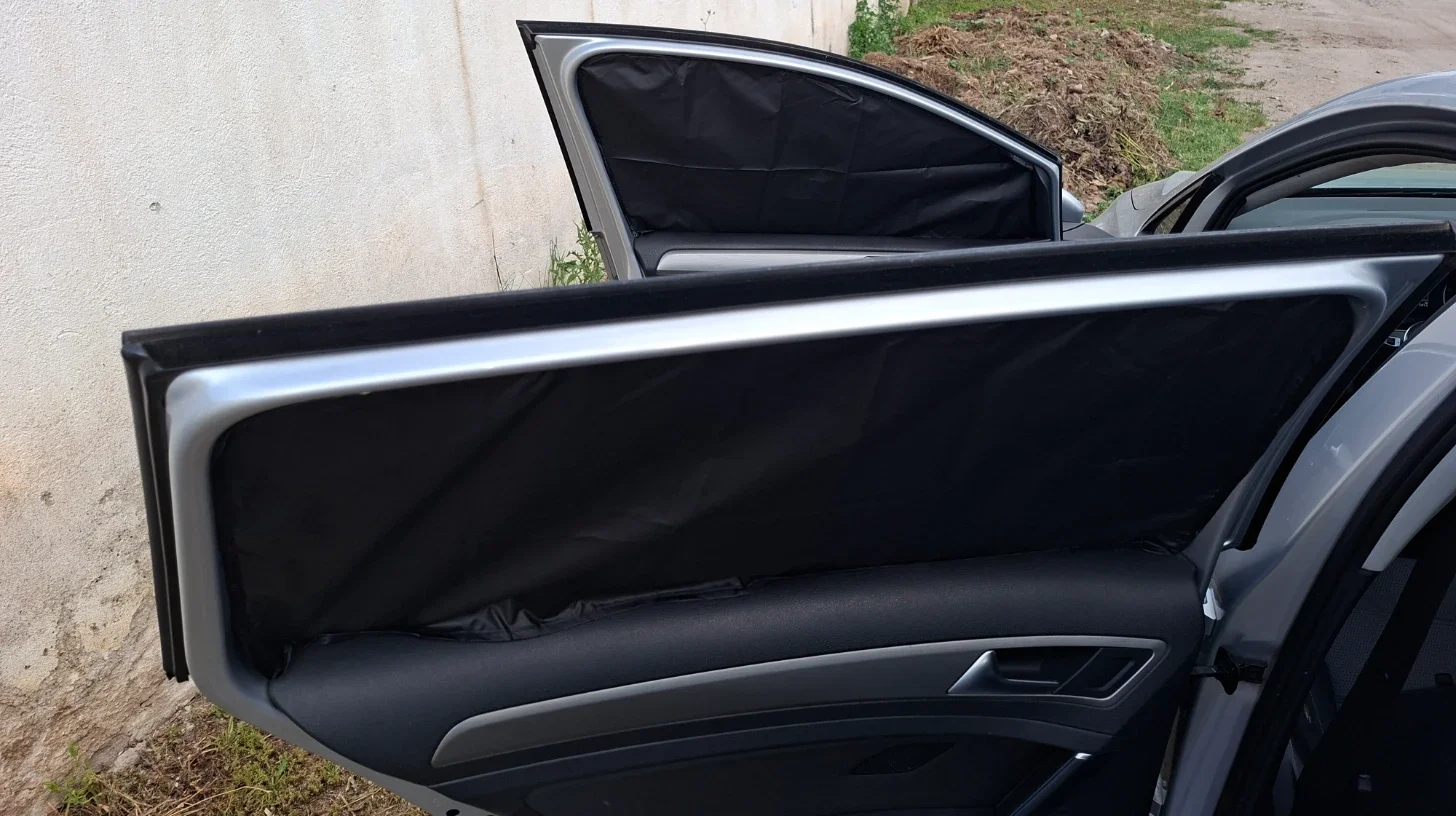
What matters here isn't darkness for its own sake. It's privacy. With the covers in place, the Golf still looks like a normal parked estate car from outside.
One unscientific but encouraging observation: during a fitting session with the side covers installed and the fan running, both of us independently noticed the interior felt noticeably cooler than the 25°C or so outside. No measurements were taken and it proves nothing on its own, but it's a promising early sign that the covers might help with heat as well as privacy.
Problem 3: Ventilation
A small clip-on fan was the next addition, bought without high expectations and genuinely surprising once it arrived. It's more powerful than its size suggests, with four speed settings, and small enough to clip to a headrest or hang from a grab handle.
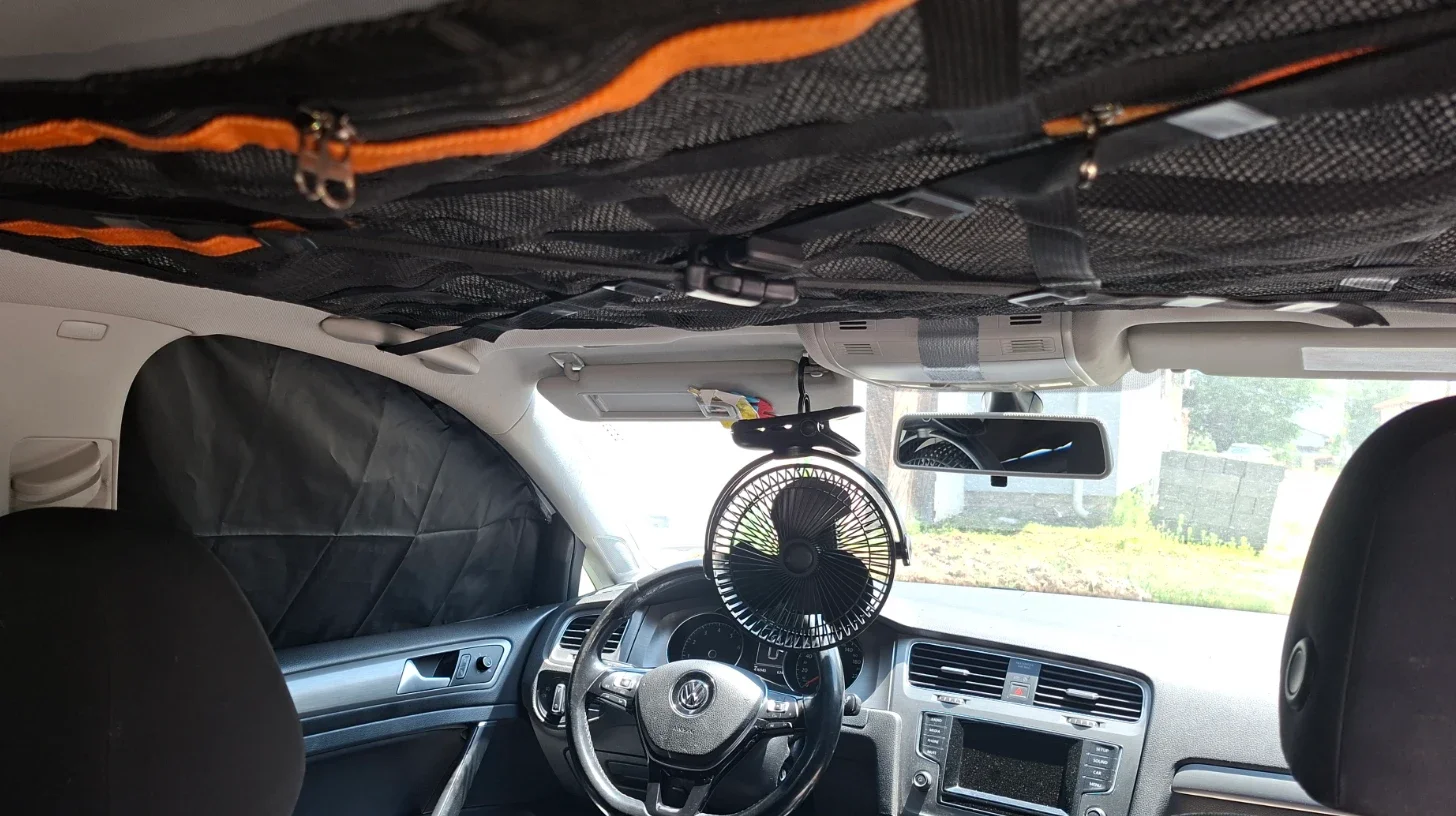
The plan on paper: two windows cracked slightly on opposite sides for cross ventilation, with the fan running overnight from a power bank to keep air moving and reduce condensation. Whether that plan actually works overnight, in real conditions, is still a theory. That test is coming.
Problem 4: Storage
The cargo net solved a problem we hadn't fully anticipated: a flat sleeping area with two people on it leaves nowhere obvious for the things you'd normally toss onto a seat. It clips into existing roof tie-down points and keeps small items off the mattress and the floor entirely.
One unexpected discovery: worrying about headroom with the net installed and bags inside it turned out to have an almost embarrassingly simple fix. Lowering the driver's seat all the way down increases usable height enough that headroom stopped being a concern at all.
The net's straps originally dangled when not under tension, but a few minutes with black electrical tape tidied them up and made the installation look considerably cleaner.
A simple spare wheel storage bag turned out to be worthwhile too, keeping dirt away from bedding and making the wheel much easier to move around the vehicle.
The Real Challenge Was Never Sleep
The assumption going in was that sleeping comfort would be the hard part. It wasn't.
The mattress works. The fan, on paper, works. The window covers, for the windows they currently cover, work. The actual difficulty turned out to be somewhere else: where do the shoes go, where do the clothes go, and how quickly can the whole thing move between travel mode and sleeping mode without becoming a chore.
Sleeping in a car is, in the end, a fairly solvable problem. Living out of one for a weekend, with two people's belongings, is the part that takes longer to get right.
Problem 5: Creating A Repeatable Travel System
A setup that requires figuring out from scratch each time where everything goes adds friction rather than removing it. The goal was knowing, without thinking about it, exactly where everything belongs in two configurations.
Day mode: the folded mattress lives under the parcel shelf. The coolbox sits in the front passenger footwell. The spare wheel, removed to free up floor space, lives in a bag behind the driver's seat. Electronics charge from the vehicle's USB ports while driving.
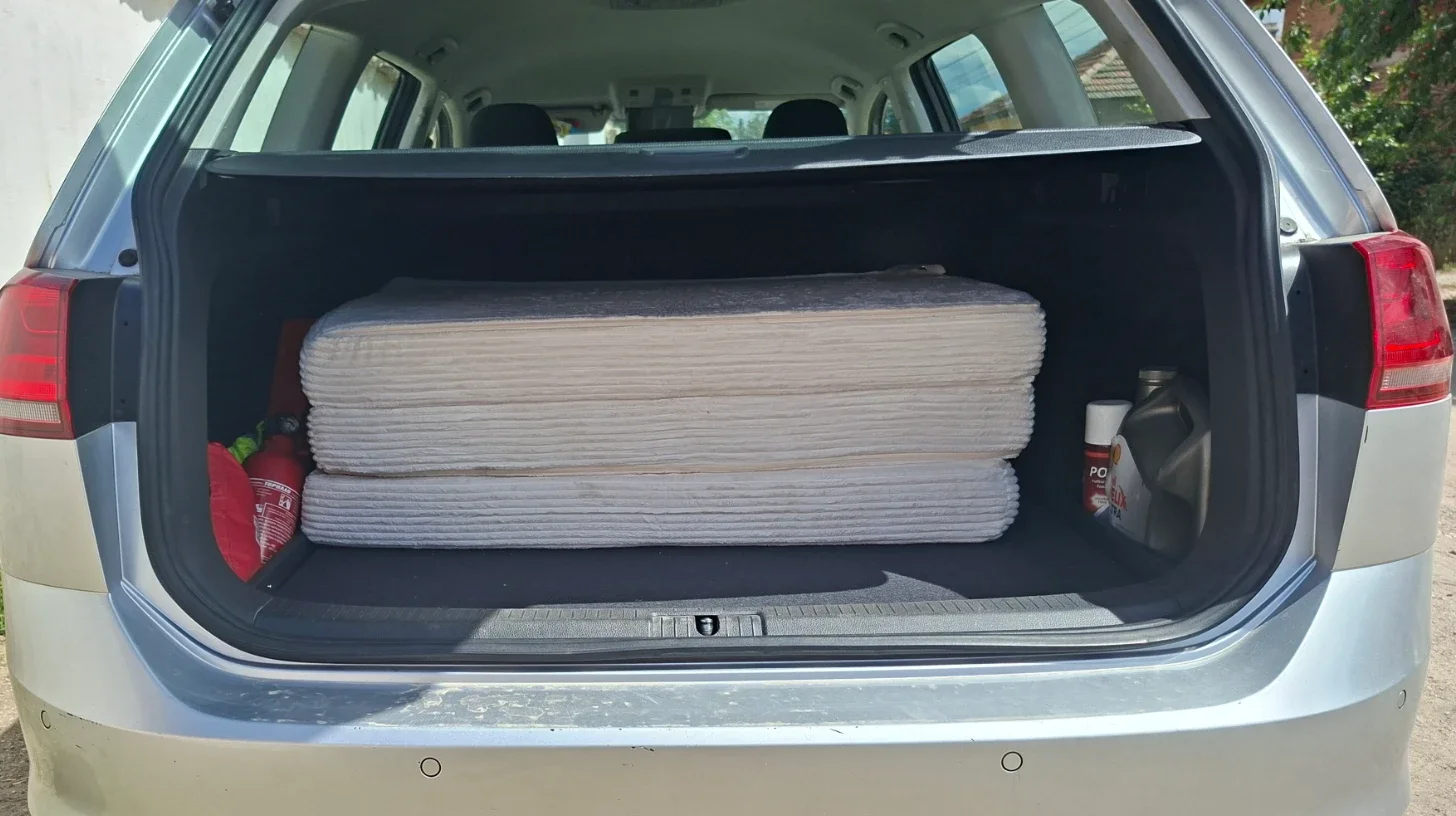
Night mode shifts the coolbox to the rear passenger footwell, hands charging duties to a power bank, and deploys the sleeping area in the space everything else has vacated.
Two fixed configurations, rather than reinventing the layout every time, is what makes this repeatable rather than a one-off demonstration that gets used once and forgotten.
From Driving Mode To Sleeping Mode
Move the front seats forward. Fold the rear seats down. Unfold the mattress. Deploy the bedding. Timed on the driveway, with the boot otherwise empty, that took 3 minutes 48 seconds.
A driveway test in daylight isn't the same as doing this after a long drive with luggage, food, and general trip clutter in the way. Realistically, the real-world version is likely five to ten minutes rather than under four.
What We Have Solved
Sleeping comfort, with a flat foam mattress that doesn't depend on air pressure holding overnight. Mattress storage, tucked under the parcel shelf during the day. Privacy for the side windows, with fitted covers. Cargo storage, via the overhead net. Charging, between vehicle USB by day and a power bank overnight. Spare wheel and coolbox placement, both with sensible day and night positions worked out. Ventilation has a plan, even if it's not yet proven.
None of this came from designing the perfect system in advance. It came from testing, noticing what didn't work, and adjusting, the seat-lowering fix and the cardboard window covers both being good examples.
What We Haven’t Solved Yet
The final window covers are templated but not yet built. Clothing storage doesn't have a dedicated system, currently just bags wherever there's space. Shoe storage for two people in a small space is unresolved.
These are hard to solve through driveway testing. You don't know how clothing and footwear behave in a confined space until you've spent an actual night and morning working out what you reach for and when. They're more likely to get answered on the first real trip than through more planning at home.
The First Real Test
The setup's first proper trial was a weekend at the EKO 25h Race of Bulgaria in Kyustendil. The drive is 158 km each way, 316 km round trip, working out to approximately €19 in CNG. You can read how that first real-world overnight test went, what worked and what didn't, in Our First Real Overnight Test In A VW Golf Estate.
Accommodation near the circuit for that weekend ranged from roughly €56 to €436 per night, averaging around €171. Fuel for the entire round trip cost around one ninth of the average night's accommodation.
This isn't about avoiding hotels on principle. If a hotel made sense, we'd book one. The point is that the Golf gives us the option not to need one, and that option has value whether or not we use it every time.
There's a flexibility advantage too. A hotel booking commits you to one location, decided weeks in advance from guesswork. If the circuit turns out too noisy once we're actually there, that booking is a sunk cost. The Golf isn't. We just drive somewhere else.
Why This Setup Exists
None of this is really about the Golf, the mattress, the fan, or the cargo net. It's about what those things make possible: the Veliko Tarnovo shakedown trip, the Kyustendil race weekend, beach trips, basketball in Thessaloniki, and the wider European travel we're already talking about.
None of those trips depend on this setup existing. All of them become cheaper and more flexible because it does. A karting weekend stops being a choice between an expensive room and not going, and becomes a straightforward yes.
Removing accommodation as a barrier, and keeping the flexibility to change plans without losing money when the original one doesn't work out, is the actual purpose here. Not sleeping in a car for its own sake.
Conclusion
What we ended up with is a normal 2014 VW Golf Estate that happens to sleep two people in well under four minutes of setup, using nothing that can't be unpacked from the boot and nothing that needs removing before Monday's school run.
It's affordable, simple enough to actually get used, and it isn't finished, which feels honest, because most things worth building get refined through use rather than perfected on a driveway.
A lot of people already own a car capable of more than they think. Not a van, not a fitted conversion kit, just an ordinary estate car on an ordinary driveway, quietly able to enable weekend trips, race meets, and father-son adventures that a hotel budget would otherwise rule out.
